Science at the service of dyslexia, with customised transformational tools


As dyslexia(opens in new window) causes reading and writing problems, it is often associated with poor academic performance, as well as other conditions such as dysgraphia(opens in new window), dyscalculia(opens in new window) or attention deficit disorder(opens in new window). There is no universal diagnosis for all languages and most people with dyslexia are undiagnosed. While dyslexics can learn coping strategies, it is frequently detected too late for effective intervention. While exact figures are hard to come by, the EU-supported changedyslexia.org (Change Dyslexia) project conducted a study in Madrid using a sample of more than 1 800 children, between 7 and 11 years old from 17 public schools. They diagnosed prevalence in 5 to 8.4 % of pupils. The Change Dyslexia project has developed scientifically based applications (blending artificial intelligence, computer games, linguistic studies and data analysis) for the large-scale screening and treatment of dyslexia. To date, the approach has been implemented in 187 schools and used to screen more than 250 000 people for free. Additionally, 253 children have been awarded a DytectiveU scholarship for access to a programme that stimulates cognitive skills with 40 000 personalised exercises.
A scientific and social solution
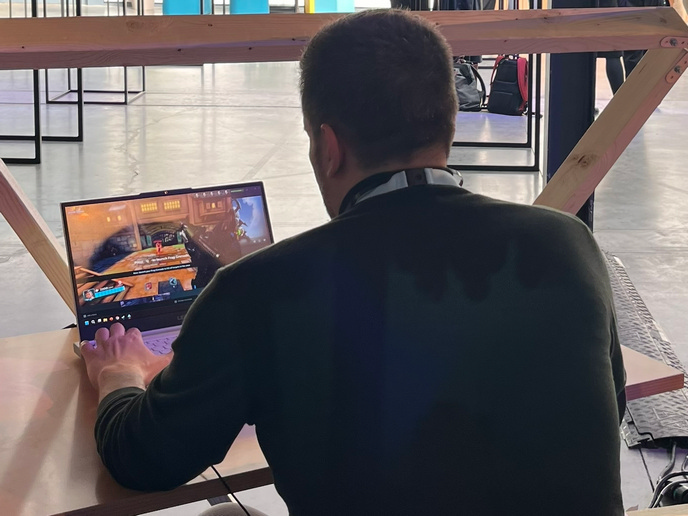
Change Dyslexia set out with three objectives. Firstly, that dyslexia ceases to be a hidden problem. Secondly, to overcome academic difficulties arising from dyslexia. Thirdly, to establish and award scholarships. This meant providing access to a screening test and scientifically validated exercises under the DytectiveU programme. The DytectiveU Test screens for dyslexia in 15 minutes and the diagnosis must be confirmed by a professional. It is the first screening test to combine linguistic items with machine learning to diagnose people from 7 to 70 years, with almost 80 % reliability. The tool considers 197 variables per person that are collected through an online test and is designed to be accessed by teachers, professionals and parents. DytectiveU is a computer game that improves dyslexia symptoms. “Children can learn while having fun, without supervision. It is a game that is automatically customised according to both the weaknesses and strengths of the child,” explains Luz Rello, founder of the social company Change Dyslexia. A 6-month, between-group experiment with 61 Spanish-speaking dyslexic students, from four schools, was conducted to demonstrate the effectiveness of DytectiveU. Both groups continued to receive professional language training, with the experimental group, in addition, using the game for 8 weeks (20 minutes, 4 days a week). The dyslexia-associated language skills were tested using the standard Dyslexia Screening Test Junior (DST-J) 6 months apart in a pre- and a post-test. Children in the experimental group showed a significantly higher reduction in the DST-J dyslexia risk quotient and significantly higher rates of improvement in three tasks related to literacy acquisition: phoneme segmentation, pseudo-word reading and verbal fluency.
Inclusive education as the foundation of sustainable development
DytectiveU has been used in 130 countries and, with Change Dyslexia’s initial focus on the Hispanic market, has been especially successful within Argentina, Mexico and Spain. “My greatest joy is the implementation of our tools through the Ministry of Education of Madrid’s ‘Help to Dyslexia’ initiative for the third year, covering 107 public schools. Children are improving and the schools are happy to maximise their resources,” says Rello. The researchers’ next step is to identify (and foster) positive traits that may be associated with dyslexia, such as strong visual memory, entrepreneurship and creativity.