Saving lives: The world's first personalised restraint control system


Each year, around 1.3 million people(opens in new window) lose their lives because of road traffic accidents. Millions more suffer non-fatal injuries. In the event of a crash, passive safety systems (PSS) trigger safety functions like airbags. However, current PSS follow a ‘few-sizes-fit-all’ development approach, which means they work best for a small number of specified body physiques. Addressing this is the EU-funded SMART-RCS(opens in new window) project. “Our main objective was to develop and introduce the world's first personalised restraint control system to the market. We aimed to address the limitations of existing restraint control systems by considering individual human body characteristics and situational factors. This approach would optimise the behaviour of a vehicle's PSS, such as airbags, in the event of a crash or critical situation,” explains project coordinator Florian Seitner, CEO of emotion3D, a deep tech company specialising in touch-less analysis of humans using 2D and 3D imaging technologies.
Developing a world first
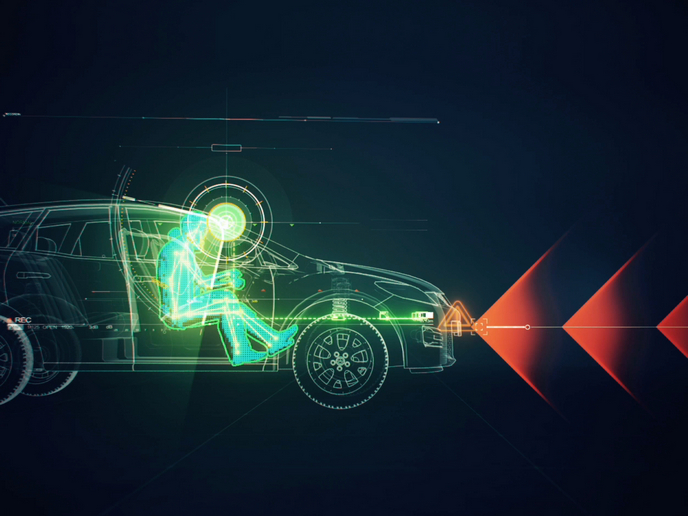
“We have successfully created the world’s first personalised restraint control system. Notably in line with Euro NCAP's Vision 2030(opens in new window) for adaptive restraint control, this groundbreaking product holds potential to become a mandatory component in all vehicles in the foreseeable future. We are proud to have taken the first step toward significantly enhancing PPS and making a meaningful contribution to the Vision Zero(opens in new window) initiative,” confirms Seitner. The system consists of two parts: the human sensing module and the adaptive restraint control system. The human sensing module comprises two pieces of hardware: a 3D time-of-flight (ToF) camera and a processing unit running human analysis software. The adaptive restraint control system computes the optimal airbag deployment strategy for any given situation. By analysing data from the 3D ToF camera, including body physique, body position and pose, weight, sex, age, and seatbelt information, the adaptive restraint control system can adjust parameters such as airbag deployment location and force to provide the best possible protection for each occupant.
Providing customised safety for all
The personalised approach ensures that the system caters to the specific needs and characteristics of different occupants, including vulnerable groups such as children and female drivers/passengers. “The aim is to significantly reduce the severity and number of injuries, as well as deaths in road accidents by providing optimal protection tailored to each individual,” adds Seitner. Since development phases, there has been strong interest in the system from original equipment manufacturers (OEMs) and project partners have already successfully demonstrated the resulting solution on-site to OEMs. As for next steps, Seitner concludes: “All partners are actively working on the commercialisation of the product. Moreover, the findings are being shared with regulatory stakeholders to support the development of new industry standards. On the R&D front, enhancing the 3D human sensing capabilities and the amount of data used by the SMART-RCS for personalised protection are planned. We are also focused on further development testing and validation methodologies for adaptive restraint control systems.”