


I - Delivering the future


To increase the biomethane share in the EU gas market, we need to understand non-technological barriers to deploying production technologies, for example regulatory, financing and social, and develop appropriate market uptake measures and mechanisms to overcome them.”
Maria Georgiadou, Senior Expert at the Directorate-General for Research and Innovation
Bin2Grid: Turning unexploited food waste into biomethane supplied through local filling stations network
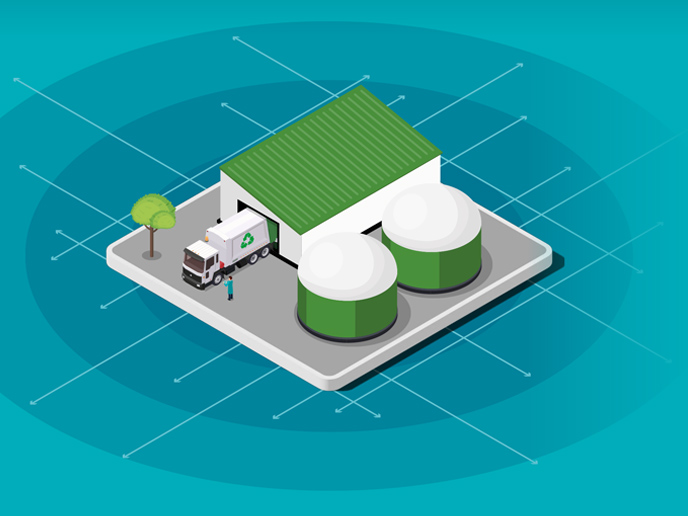
Over 88 million tonnes of food are thrown away in the EU every year. The Bin2Grid project promoted the collection of food waste, and its conversion to biogasBiogasis a mixture of methane, carbon dioxide and trace gases produced by the microbial decomposition (fermentation) of organic wastes. and upgrading into biomethaneBiomethaneis chemically identical to natural gas, but produced sustainably from renewable sources such as biomass., supplying stations in Zagreb, Skopje, Malaga and Paris. To bridge the gaps between waste management and renewable energy production, the project investigated technologies related to biowaste separation and treatment, biogas production and upgrading, and economic tools to boost profitability of the concept.
BiogasAction: Promotion of sustainable biogas production in EU
The BiogasAction project developed the European biogas sector across 14 European regions by focusing on the removal of non-technical barriers to widespread production from manure and other organic waste. As well as a comprehensive biomethane market web portal, the project created a guidance document for investors on financing biogas and biomethane projects, and advice for policymakers and local authorities on improving national framework conditions for biogas and biomethane deployment.
BIOSURF: BIOmethane as SUstainable and Renewable Fuel
By harmonising biomethane registration, labelling and certification, we can streamline cross-border trade in biomethane. The BIOSURF project extended national registries of biogas injection to the whole of Europe, enabling movements of biomethane through the European natural gas infrastructure. It also developed a calculation to quantify the greenhouse gas emissions of biomethane that is compliant with both the RED framework and the EU Emissions Trading System.
ISABEL: Triggering Sustainable Biogas Energy Communities through Social Innovation
Sustainable biogas technologies have been slow in catching up with community energy developments. Founded on the principles of Social Innovation, the ISABEL project carried out work in Germany, Greece and the United Kingdom to pave the way for the transition from traditional supply chains to community ownership, allowing citizens to take full advantage of the ample societal benefits of local community-driven biogas systems.