Recycling textiles: from collection to retail

Textiles and fashion are priority product groups in the EU’s Circular Economy Action Plan(opens in new window), which specifies the separate collection of textiles from 2025 onwards. With historically less than 1 % of textile waste recycled into reusable fibres, manufacturers and consumers need to change their behaviours if textiles are to become part of the circular economy. The EU-funded SCIRT(opens in new window) project addressed this emerging problem by exploring all steps in the production chain of recycled garments.
Tools for recycling, sorting and trimming
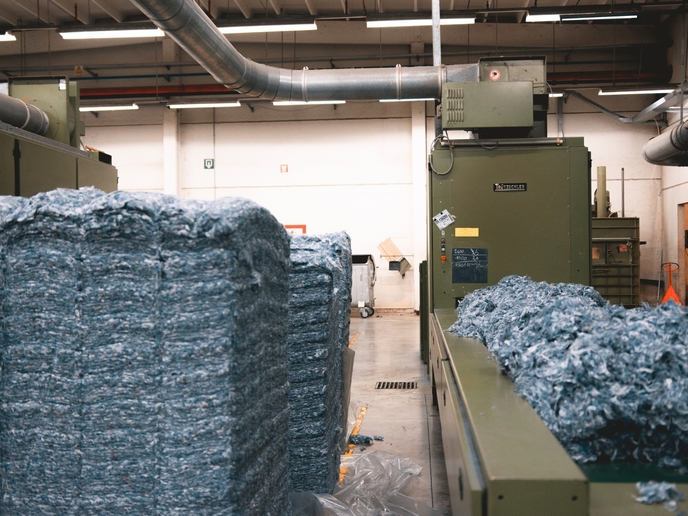
SCIRT demonstrated a textile-to-textile recycling system for post-consumer materials. This process posed several challenges, notably in effectively separating textiles. According to project coordinator Evelien Dils: “One of the main challenges we started with was the quality of recycled yarns not aligning with the requirements from fashion brands. What has been crucial for this is the improved sorting and dismantling of textile waste before it goes to recycling and improvements in the mechanical recycling process itself.” Different paths to recycling were tested in labs and in pilot studies, exploring enzymatic approaches, thermo-mechanical and mechanical methods. Project partner Valvan(opens in new window) developed two mechanical technologies for accurately sorting and trimming textiles at high speed. Fibersort separates material based on fibre content and colour using robots and near-infrared technology. Trimclean then takes the separated fibres and cuts them into small segments ranging from 20 mm to 100 mm in size. The fragments are analysed using cameras and metal detectors to remove non-fibre elements such as tags, buttons and zips. With ongoing development, these automated sorting and dismantling procedures have lowered the cost of textile recycling and increased the recyclability of garments to 90 %.
Tools to improve circularity
The SCIRT system was designed to address all aspects of the production chain. This structure revealed many challenges, but as Dils says: “This really strengthened the understanding of the involved value chain partners of the importance of collaboration beyond company borders, a crucial point in the transition towards a more circular system.” One of the tools created for value chain partners is the True Cost Calculator(opens in new window), developed to give stakeholders a clear assessment of a garment’s real societal cost, taking into account financial, ecological and social concerns. To date, 670 users have made 830 calculations using the tool, and project partner VITO(opens in new window) has launched a user survey to guide further development of the calculator.
Centring the consumer
Europe generates more than 15 million tons of textile waste each year. Fast fashion trends exacerbate the problem by increasing the rate of disposal and reducing textile quality. Viable solutions to the problem of textile waste must address consumer demands. Consumers have concerns about the availability and affordability of recycled products and respond well to financial incentives to recycle old clothes. Because of this feedback, project partner Bel&Bo(opens in new window) has initiated a successful take-back programme at its stores, where customers earn discounts on future purchases when they drop off unwanted garments. The discarded clothes are then redistributed through second-hand stores. Technological innovations, educational campaigns and an appreciation for consumer demands are improving the circularity of the textile industry, and SCIRT initiatives have produced several high-quality garments marketed online and in stores. These items include jeans and sweaters available from HNST(opens in new window). Not only are these items made from at least 50 % recycled textiles, but they are consciously designed for efficient recycling down the line. With such viable products already in the market, SCIRT has demonstrated that the textile industry is ready to participate in the circular economy.