



Nourishing the green shoots of livestock grazing

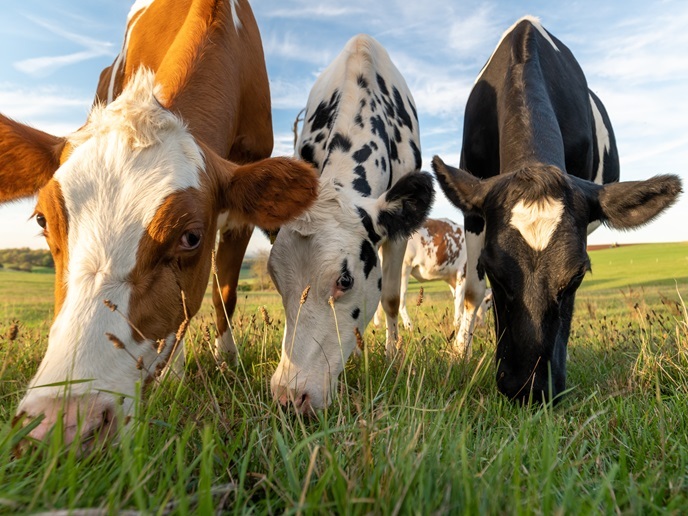
Properly managed, grazing livestock can offer a range of benefits. Often referred to collectively as ecosystem services, these benefits include improved animal welfare, cleaner air and water, and even fire prevention. Grazing also holds economic and social value: as Arno Krause from the Grassland Centre(opens in new window) (website in German) in Germany notes, “Grazing animals work as an agroecology advertisement, with research indicating that up to 90 % of consumers prefer knowing animals have been out in fields, at least during summer. But we can’t take these bucolic scenes for granted. Once grazing is gone, it’s gone.” “It’s much harder to revert to grazing from indoor farming, than the reverse,” adds Krause, coordinator of the Grazing4AgroEcology(opens in new window) project. “We have to actively invest in grazing.” With the trend towards larger herds , requiring more pasture and labour, grazing is declining in some European countries(opens in new window), such as Germany and the Netherlands. The Grazing4AgroEcology project aims to provide European ruminant livestock farmers with the necessary grazing ‘know what’ and ‘know how’. Grazing relies heavily on local knowledge to be effective, with variations in topography, soil chemistry, water availability and weather conditions. “Optimised grazing is site-specific,” explains Krause. “For example, knowing where parasite hot spots are is vital to avoid diseases spreading. Grazing farmers have to be like chefs, experimenting until they find the right ingredients. We want to give them cookbooks.”
Knowledge sharing is the key to success
Grazing4AgroEcology was guided by five agroecology principles: adopt management practices that improve animal health, reduce both production inputs and pollution, enhance diversity to strengthen animal resilience, and preserve biodiversity. The project worked with 120 conventional and organic partner farms(opens in new window) and 18 partner organisations in eight Member States(opens in new window): France, Germany, Ireland, Italy, the Netherlands, Portugal, Romania and Sweden. To discover, embed and share the most impactful innovations, two online platforms were developed , enabling multiple tiers of networking and knowledge exchange. The first(opens in new window) focused on peer-peer exchanges, sharing experiences and best practice related to specific innovations, such as using solar panels to provide shade for grazing animals. A searchable database was created to host farm profiles and assets such as videos, for farmers to find inspiration relevant to their circumstances. Regular networking activities also allowed farmers to meet face to face and online. The second tier concentrated on Agricultural Knowledge and Innovation Systems(opens in new window) (AKIS) bringing together individual, organisational and institutional stakeholders along the value chain, to build capacity related to agroecological practices, such as for water management.
Evidence-based agroecology policies
More effective agroecology practices would contribute to a range of EU ambitions such as those under the European Green Deal(opens in new window), biodiversity strategy(opens in new window) and organic action plan(opens in new window), as well as Vision for Agriculture and Food(opens in new window). But the success of the Grazing4AgroEcology approach will ultimately be determined by increased grazing quality and quantity. To measure this, the team developed an ‘integrated self-assessment tool’(opens in new window), which generates a score against five agroecology pillars (reducing inputs, enhancing diversity, reducing pollution, biodiversity, and animal welfare), helping farms monitor their progress. Indicators of success are being collated to help inform policy recommendations, currently under development. To ensure sustainability, the project’s platforms will be maintained by French partners, linked to the EU-FarmBook initiative(opens in new window). Meanwhile Krause is promoting continued network engagement through activities such as study tours. “The best hope for the future of grazing is our network; researchers and practitioners, men and women, old and young, all committed to the same agroecology goals,” concludes Krause.