A framework for animal sentience

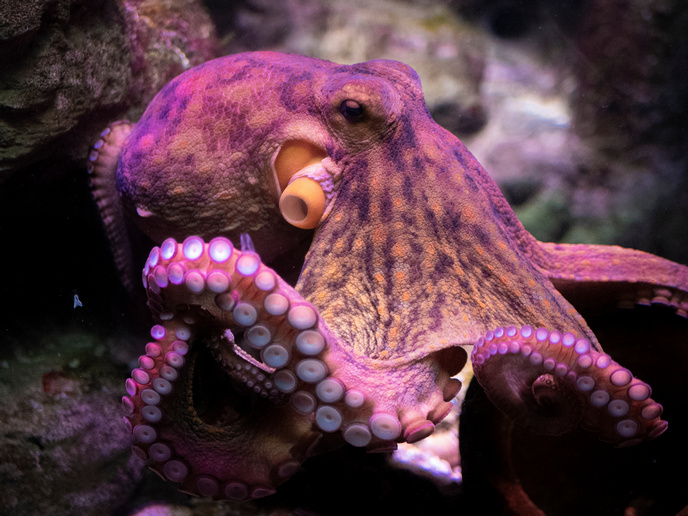
In his 1974 essay, ‘What Is It Like to Be a Bat?’(opens in new window), the American philosopher Thomas Nagel explored one of the thorniest problems in philosophical thinking: how to explain subjective experience. Even if as humans we may imagine what the internal world of a bat might be like, there is still no real way of knowing. Philosophers and biologists still explore this question today, with somewhat greater urgency. The idea that some, possibly many animals, possess sentience – the ability to have feelings such as fear, pain or pleasure – could have profound impacts on animal welfare. Yet debates still continue, largely due to the difficulty of defining the nature of sentience. In the 5-year European Research Council(opens in new window) (ERC) funded ASENT(opens in new window) project, a team led by Jonathan Birch, director of the Jeremy Coller Centre for Animal Sentience(opens in new window), aimed to resolve these debates by constructing a conceptual framework for thinking about sentience. The multi-year project had significant real-world impact, notably with the opening of the centre and a major 2021 review(opens in new window) which led to lobsters, octopuses and crabs being recognised(opens in new window) by the British Government as sentient beings. “The project really was more successful than I dared to imagine, particularly in terms of the real-world impact,” says Birch, from the London School of Economics.
A methodological framework for exploring animal sentience
The intention of the project was always three-pronged, developing the theoretical side, the empirical side and with the hope of achieving impact in the world. As part of the ERC project, the team developed a framework for synthesising existing evidence of sentience in invertebrates by collecting together different lines of evidence from disparate fields. This was timely as the British Government was then drafting the Animal Welfare (Sentience) Bill and they needed advice. “They commissioned a team led by me to synthesise the evidence for octopuses, crabs, lobsters, shrimps; and we ended up making a recommendation that resulted in a change to that act, which is brilliant,” adds Birch.
Experimental evidence for insect sentience
The project collaborated with researchers at Queen Mary University of London(opens in new window) and Royal Holloway(opens in new window). “We did a wide variety of experiments, some of which have really been driving the conversation around the possibility of pain in insects,” remarks Birch. One of these found evidence of directed grooming in insects, touching parts of themselves exposed to heat, which suggests they are feeling pain. Experiments on bees also found evidence of motivational trade-offs, the ability to make a decision on how much pain to withstand to get a reward: like running through the pain barrier. “Obviously this is not proof of pain,” says Birch. “But it is evidence that challenges long-held assumptions, and so that should make a difference to how we treat insects going forward.”
The Edge of Sentience
Despite the enormous success of the project, debates around animal sentience still continue. There are “fundamental obstacles to our ability to achieve certainty or proof or conclusive evidence that makes doubt unreasonable, so we’re not going to get there,” explains Birch. “But then the crucial thing is not to swing all the way to the other side.” In 2024, Birch published a book, ‘The Edge of Sentience’(opens in new window), which explores these issues in detail. “In a way, for me that’s the most central output of the project, because it’s my own personal path through these issues.”