Uncovering the underground economy in Maoist China

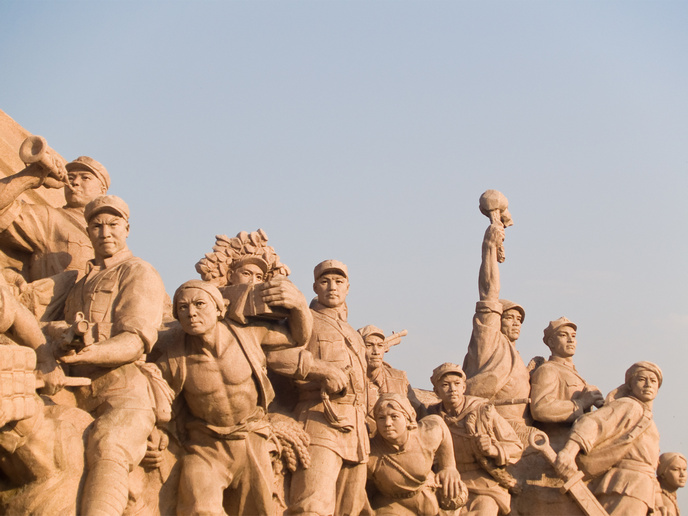
In 1966, Mao Zedong, the former chairman of the Chinese Communist Party, launched his Cultural Revolution to purge society of capitalist and bourgeois influences. While many scholars have studied the impacts of this social upheaval, the everyday working of the Maoist economy and the scale and scope of informal business activities have been obscured. “The Cultural Revolution has largely remained a lacuna for historical researchers, except for those studying high-level political processes,” explains Adam Frost(opens in new window), postdoctoral fellow at Copenhagen Business School. “Most of the view of that period is from the top down, which has contributed to the prevailing narratives of Chinese economic development,” he says. Rather than the heavy control these narratives suggest, state capacity was in fact rather limited in its ability to shape the entire economy, and informal entrepreneurship still existed. In the INFORMALITY project, which was funded by the Marie Skłodowska-Curie Actions(opens in new window) programme, Frost explored the extent and influence of this informality. Through analysis of historical documents, he uncovered the economic subversions within Maoist China to understand their role in reshaping the economy from the ground up. “Ultimately, I tried to argue that it was actually quite massive,” notes Frost. “There’s very compelling evidence that throughout the Maoist period, the economy is being revolutionised from within.”
Reconstructing the past from discarded archival materials
Formal archival access for this period is hard to come by, and archivists within China have little incentive to show documents to foreign academics. So Frost turned to another source: archival garbage. During the 1980s, many institutions were consolidated and archival materials were decommissioned and sent to paper pulpers to be recycled. Yet some were sold, leaving accessible low-level government archives. While the state deemed this information worthless, for Frost it was a gold mine, a unique window into everyday economic activity. He amassed more than 6 000 case files of people prosecuted as speculators or profiteers, which include interrogation transcripts and confession letters (likely often written under duress), receipts, contracts and account books. To estimate the amount of prosecuted economic activity across the country, Frost created the largest quantitative data set for this period. Combining this with reports from a higher level, such as internal reports and speeches, as well as oral histories and interviews with former government officials, he could get a deeper sense of the underground economy.
Subverting popular narratives of economic development
The results add to growing evidence that prevailing narratives miss the extent of bottom-up forces that have driven China’s economic development over the last century. Frost’s research also pushes back the starting point of China’s economic transformation to before Deng Xiaoping’s announcement of reform and in 1978. “The key thing that I argue is that the opening up was not a watershed,” adds Frost. “In essence the reforms were a formalisation of informal practices that had already become ubiquitous in Chinese society.”
Accolades within management scholarship
The first article published from the project in ‘The China Quarterly’(opens in new window) won the 2024 Gordon White Prize, while another paper(opens in new window) on Maoist officials won a top paper prize at the Academy of Management(opens in new window). The culminating output of the project will be a book, ‘Can Capitalism be Killed? The (Un)Making of a Market Economy in Maoist China, 1958–1978’, soon to be published by Harvard University Press.