A toolbox to promote investment in soil health

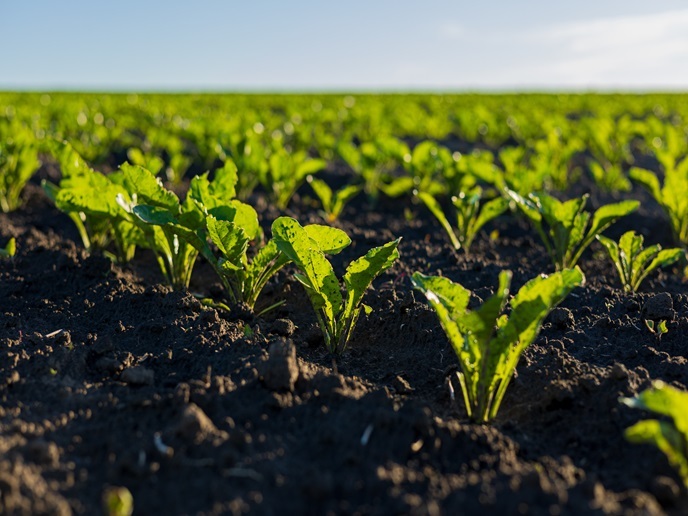
Life as we know it cannot exist without soils. They provide clean water and habitats for biodiversity, and support our entire food system. Yet the health of our soils is increasingly under threat. The EU-funded NOVASOIL(opens in new window) project aimed to highlight the benefits of investing in soil health for farmers, society and the environment. For this, the researchers set out to create a toolbox of good practices drawn from experiences in Europe and around the world, to promote sustainable soil management.
Addressing perception of soil health
NOVASOIL was born out of three previous soil projects, through which it was discovered that the perception of soil health is different among stakeholders. “For instance, for an agronomist, soil health is soil that provides or produces a lot of food, but they may not consider its resilience to climate change,” explains Francisco J. Blanco-Velázquez, project manager at Evenor-Tech(opens in new window). The challenge in NOVASOIL was therefore to show that improving the condition of soil from an environmental and ecological perspective can also provide the maximum level of ecosystem services.
Co-developing toolbox of best practices
To account for these different perspectives, the project team developed a toolbox of best practices, which is now available on the project’s website. The team began by identifying the incentives and barriers to investing in improved soil health, based on a mapping of several existing case studies. After this, key stakeholders were invited to participate in different activities to define the toolbox functionalities, and to offer recommendations for improvement. The NOVASOIL team also gathered perspectives from farmers, landowners and consumers. Participants selected which characteristics were most promising from several options of business models, including duration, payment frequency and types of monitoring. “All this knowledge was then translated into a guide for implementing business models, communication materials identifying which types of incentives should be promoted, and of course, into the toolbox itself,” says Blanco-Velázquez.
Promoting ethical practice in soil health business models
The project also produced an ethical code of conduct for business model development related to soil health. This has attracted strong interest both from related projects and from the European Commission. The code encourages different perspectives to be included when considering future investments, not just economic but also environmental, such as from NGOs. In addition, the team developed a geoviewer(opens in new window) for soil data generated and used in the project. This allows users to explore soil data (for example the composition of organic matter and carbon levels) from various case studies and download the data to access it easily. The toolbox will offer open and free access for at least four years and hopefully longer, to keep lessons from the project available to all. “We already know that our results are being used by third parties, which makes us very pleased that our project is having a real impact,” adds Blanco-Velázquez. “Many of the project’s case studies are based on sustainable management practices, for example, using more nature-based solutions instead of chemical inputs. The key message we must convey is that there is a market for this type of management, which will help us to move towards sustainable food production.”