Strategies to support biodiversity management on farms

Biodiversity management can actively support processes that farmers need in order to remain productive. These include enhancing natural pest control and pollination through attracting a variety of beneficial insects, as well as improving soil health through nutrient recycling. Many current agricultural practices however – such as monoculture and the excessive use of chemical pesticides and fertilisers – do not support biodiversity and can in fact be detrimental. To encourage the transition away from such practices, field studies are needed that fully involve farmers and clearly demonstrate both the costs and benefits of biodiversity management to their livelihood. This was the central aim of the EU-funded SHOWCASE(opens in new window) project. With the involvement of farmers, the project set out to test various biodiversity management strategies in order to assess their effectiveness. “We wanted to show the whole picture, to better understand why so few farmers have adopted biodiversity measures and show what needs to be done,” explains project coordinator David Kleijn from Wageningen University(opens in new window) in the Netherlands.
Boosting biodiversity, strengthening productivity
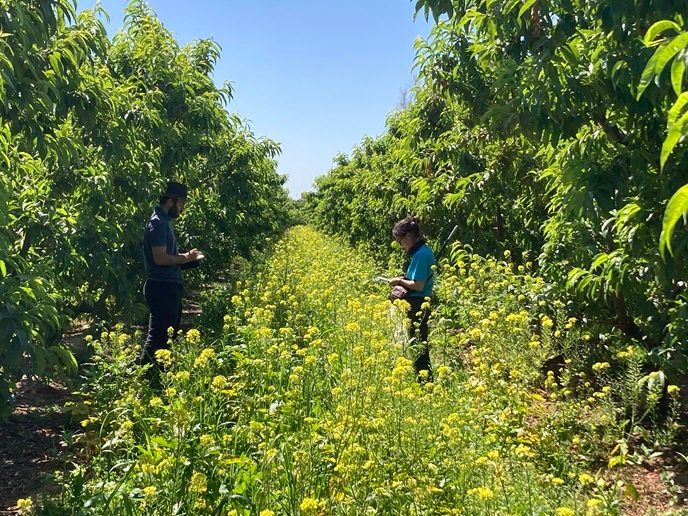
The project established networks of farmers, advisors, local people and researchers at 11 so-called Experimental Biodiversity Areas across 10 European countries. Researchers found that nature-friendly farming helped to boost biodiversity in all countries studied. In Hungary for example, pollinator-friendly agricultural practices such as the seeding of native wildflowers resulted in increased populations of wild bees, hoverflies and butterflies. Wildflower fields were found to be especially important in late summer, when arable landscapes do not provide any other flower resources for pollinators. In the United Kingdom meanwhile, cover crops, which are planted to cover and protect soil when not being used by other crops, were found to bring significant biodiversity benefits. Some 26 % more spiders and 53 % more earthworms were recorded in cover-cropped plots over winter. These and other findings are contained in a project handbook entitled ‘Farming with Biodiversity’(opens in new window), which serves as a practical, evidence-based guide for farmers, advisors and policymakers.
Support for sustainable practices
The fieldwork also helped the team better understand what motivates farmers and what can be done to encourage biodiversity management. “In France, we looked at whether managing grasslands to produce more flowers could improve sunflower yield,” adds Kleijn. A key conclusion was that while flower-rich grassland attracted more bees and increased pollination, financial support was critical in order to introduce this biodiversity measure. “What we found was that while many farmers are interested in biodiversity, they also see a number of barriers,” remarks Kleijn. “These include a lack of advice on switching to more sustainable practices, and a lack of funding mechanisms.” Other challenges included concern about what fellow farmers thought, and whether biodiversity management practices fit into common concepts of what good farming entails. “We found that trust was really important,” adds Kleijn.
Recognition for conservation management
These findings led the project team to make a number of observations, including the need for better communication. To this end, the project produced awareness-raising materials(opens in new window), ranging from fact sheets on the relationship between biodiversity and food security to advice on free and effective pest control solutions. Another key point was that farmers need to be better recognised and rewarded for conservation management. At the moment, farmers that integrate biodiversity measures risk being outcompeted in the global market, where the lowest cost often wins. “If society wants farmers to embrace biodiversity and still compete in the global market, then society needs to pay them,” notes Kleijn. One way of achieving this could be to encourage other actors, including the food industry, to support farming systems that enhance biodiversity, such as the planting of hedgerows. “The EU’s Corporate Sustainability Reporting Directive(opens in new window) is really helpful in this respect,” says Kleijn. “If we can make biodiversity management more competitive, this will attract more farmers to conservation.”