Opening the door to treatment of untreated brain aneurysms


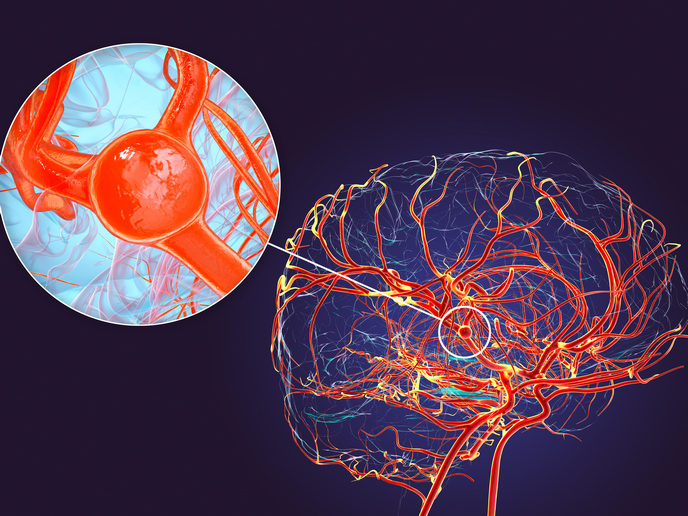
An unruptured intracranial aneurysm (IA) occurs when a localised bulge forms in a blood vessel in the brain. Bursting of the weakened blood vessel walls here can cause life-threatening bleeding that could lead to stroke, brain damage and even death. “There is no medication available to treat this condition,” says Damocles project coordinator Yacine Boulaftali(opens in new window) (webpage in French) from Inserm(opens in new window) in France. “The only way to treat an IA is with surgery, but this carries with it major risks.”
Platelets and the formation and rupture of IA
The decision to carry out surgery is not taken lightly and depends on a number of factors. For some patients, the size, angle and location of the IA make surgery all but impossible, with the potential risks outweighing the benefits. “When this is the case, the decision is often taken to monitor the IA as it is,” adds Boulaftali. “This leaves patients feeling like they have a bomb in their head that could go off any day. This can be very stressful.” The Damocles project, which was supported by the European Research Council(opens in new window) (ERC), sought to find new solutions for patients with inoperable IAs. The starting point was to identify key factors that can trigger a burst. “We know that these triggers include inflammation, enzymes that digest vessel walls, and thrombosis (i.e. clotting within the aneurysm),” notes Boulaftali. “Platelets (cells in the blood that help form blood clots) are a major component of thrombosis. What we don’t fully understand is the role they play in the formation and rupture of IA.”
Tracking disease progression non-invasively
To answer this question, Damocles brought together experts in neurovascular surgery, vascular biology and haemostasis (i.e. blood clotting). “Thanks to the ERC grant, I was also able to build up a team that included one postdoc, two PhD students, and various interns that came to work in our lab,” says Boulaftali. The project team studied the formation and rupture of aneurysms in mice, identifying platelet receptors responsible for functions such as clotting. They looked at blood plasma data from patients with brain aneurysms, which helped to confirm that platelets indeed play some role in IA. “We also developed tools and imaging processes to monitor the development of brain aneurysms,” explains Boulaftali. This enabled the team to track disease progression non-invasively in preclinical models. These techniques could prove useful in monitoring possible therapies to address inoperable IA.
Therapies that target inoperable aneurysms
A key breakthrough was the identification and patenting of two molecules that might block certain platelet receptors and play a role in preventing brain aneurysm rupture. Boulaftali and his team are currently in the process of validating this work through a follow-up ERC project entitled INTERRUPT. “The question now is whether we can block these receptors, and what this means in terms of IA rupture,” he remarks. “Also, the molecules we have identified can target many things in body. We need to find ways of delivering these locally, direct to the brain aneurysm.” This work could open the door to potential new therapies that target inoperable aneurysms, as well as non-invasive tools to monitor treatment. “There is still a long way to go, but we have laid the groundwork for therapeutic action,” adds Boulaftali.