The broader fallout from the decline in pollinators

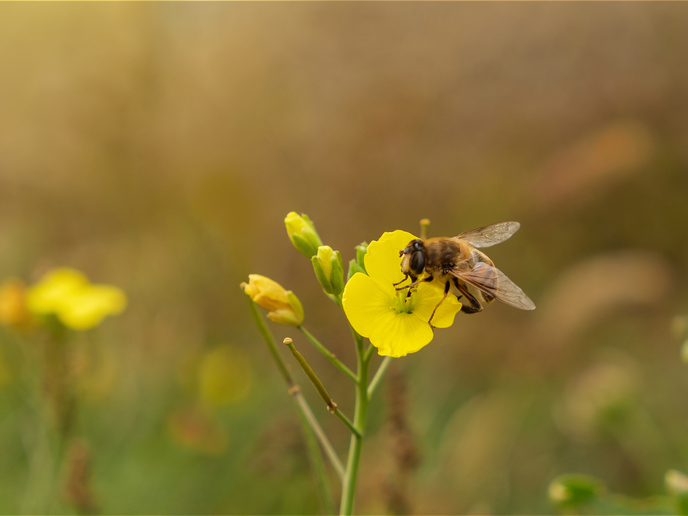
Pollinating insects are vital for many plants around the world, and their decline is a major threat to global food security. Yet their falling numbers, which are being monitored in novel ways, also affect the plants that depend on them for reproduction. Recent research suggests that reduced pollinator availability may be changing the composition of grassland and may have far wider ecological impacts. “Plants that depend on pollinators for sexual reproduction tend to have a lower dry matter content and thinner leaves than plants that are wind pollinated, such as grasses,” explains Yann Clough(opens in new window), an ecologist at Lund University. Many of these plants are associated with higher rates of insect herbivory, higher palatability to grazers such as cattle or sheep and higher rates of decomposition. “This would suggest if lower pollinator availability results in a shift in vegetation, this could lead to a ‘slower’ ecosystem,” says Clough. In the DrivenByPollinators(opens in new window) project, which was funded by the European Research Council(opens in new window), Clough and his team sought to uncover more about the potential impacts of pollinator decline on wild plants and ecosystems. Through a variety of experiments on natural pastures and in cages on a seeded experimental site, the researchers assessed changes in plant communities and the impacts on other organisms.
Assessing the impacts of land-use change on pollinator groups
The researchers used modelling, informed by empirical data they collected, to link the landscape-scale land use to the availability of different pollinator groups. The team used two different experimental approaches manipulating the availability of pollinators to plant communities with cages and nets, to formally test whether lower pollinator availability causes changes in plant community composition and in ecosystem processes. “The analyses are still finalised, though preliminary results suggest stronger evidence for the effects of a reduction of pollinator availability on plant communities than we were expecting, which is exciting,” says Clough. The researchers are still working to understand what the implications may be for ecosystem functioning, though early indications suggest some effects may be more transient as plants respond to a pollinator-deprived environment, while others persist.
Informing grassland management
The work complements recent research showing a decline in insect-pollinated plants in northern and north-western Europe. “Our results suggest that it is very likely that besides factors such as changes in management and increased atmospheric nitrogen deposition, changes in the availability of pollinators can also contribute to this,” adds Clough. There has been some tension between promoting plant diversity with higher grazing intensity and less plant competition and managing for insect diversity by increasing the vegetation that supports insects. “Our work implies that ensuring resources for pollinators will also help contribute to wider nature conservation and restoration goals, which are often tied to the composition of the vegetation,” remarks Clough. “This will help inform management choices, for instance in terms of adapting grazing intensity in nature reserves and other species-rich grasslands.”
Investigating the role of pollinators as a buffer for land-use changes
The researchers are continuing to weave together the various strands of the project to gain a big picture understanding of their work. Meanwhile, they are using the unique datasets generated in the project to better understand how year-to-year variability in surrounding land use affects pollinator and plant availability, and if changes in pollinator community size can help to buffer these effects.