Testing an easy-access ecosystem for nearly zero energy building design

The building sector accounts for roughly 40 % of Europe’s energy consumption and nearly one third of its greenhouse gas emissions. In response, the European Commission has issued a directive on the energy performance of buildings(opens in new window), calling for new construction with very low energy needs that can be met through renewable sources. This demand places a lot of pressure on market players. The EU-funded iclimabuilt(opens in new window) project created a one-stop shop for businesses engaged in the construction of nearly-zero energy buildings (nZEBs) to transform the building sector.
A single entry point for services
To facilitate the transformation, iclimabuilt designed a single entry point (SEP) system for stakeholders. Simply by registering, users have access to a range of nZEB technologies and materials. The iclimabuilt ecosystem hosts 28 service providers and is administered by the WiseClimaBuild (WCB)(opens in new window) company. WCB acts as an intermediary between service providers and the user, reducing administrative complexity and facilitating engagement. The software tools available through the SEP system provide virtual performance testing, digital prototyping and system-level assessments. “These software tools are promising because they reduce development risk and cost, shorten innovation cycles and enable climate-responsive, scalable nZEB solutions,” explains project coordinator Costas Charitidis.
Different pilot lines for different places
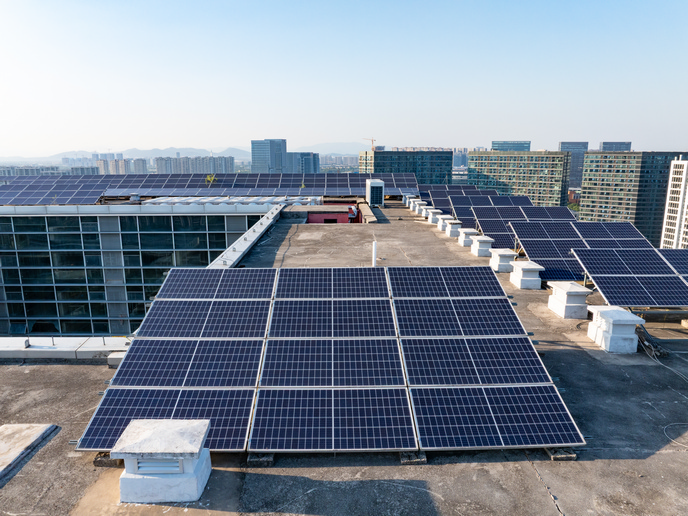
In addition to software tools, iclimabuilt offers nine pilot lines, innovative building materials in the early stages of commercial viability. Promising pilot lines include those that have enhanced thermal insulation and energy-efficient properties. Composite facade elements, phase change materials and aerogels are among the innovative solutions available. Other pilot lines support on-site renewable energy generation and circular solutions that use waste materials to manufacture insulation components. The project supports nZEB innovation in diverse environments. In the hot, dry climate of southern Europe, the need for extensive cooling and the risk of overheating are dominant concerns, making passive cooling from phase change materials and the generation of solar power ideal solutions. In contrast, Charitidis shares: “Northern European climates primarily face long heating seasons and colder, more humid conditions. Here, the ecosystem focuses on high-performance insulation materials, airtight and durable envelope systems, and multifunctional composite components that minimise heat loss.”
Validating an open innovation test bed
The project is a successful example of an open innovation test bed. Built to facilitate rapid technological advancement and market uptake, iclimabuilt delivered services in a range of categories: new product development, testing and characterisation of materials, virtual performance testing, safety and sustainability assessment, upscaling and financial support. Seven project test cases effectively validated the efficacy of the iclimabuilt ecosystem. Charitidis states: “By offering end-to-end support – from design and virtual testing to validation and upscaling – iclimabuilt reduces technical and financial risk, accelerates time-to-market, and ensures that innovations are reliable, scalable, and aligned with real market and regulatory needs.” An additional success, one that will carry iclimabuilt’s achievements beyond the duration of the project, is the establishment of the WCB company, located in Greece. With guidance from WCB, the iclimabuilt ecosystem will continue to support the technological innovation needed to make nZEBs the mainstay of the building sector.