Improving crop and livestock productivity one tree at a time

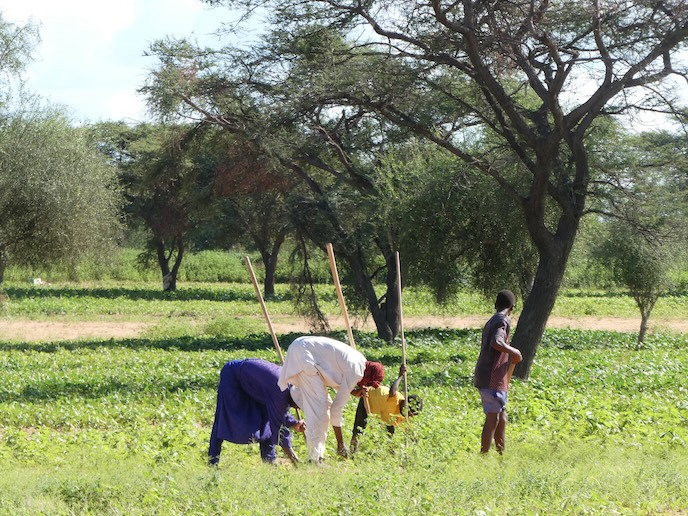
Farmers in West Africa’s Sahel manage a unique agroecosystem where trees, shrubs, livestock and crops coexist in rare harmony. This impressive level of integration offers a valuable model for other parts of the world, where agriculture is often overly specialised and harmful to the environment. These integrated systems also create significant opportunities to reduce reliance on external synthetic inputs like pesticides, which are often unaffordable for local farmers. “Locally available shrubs and trees have the potential to enrich soil, boost crop fertility and act as a source of healthy nutrients for livestock,” says Harun Cicek(opens in new window), a researcher at the Research Institute of Organic Agriculture(opens in new window). Helping to put that potential into practice is the EU-funded SustainSAHEL(opens in new window) project.
Turning shrubs into mulch and trees into antibiotics
Using rigorous scientific methodologies, the project successfully identified local and exotic shrub and tree species that Sahel farmers can use to improve crop and livestock productivity. For example, researchers demonstrated how cuttings from specific species can be applied as mulch, thus protecting the soil and increasing crop yields. “We also selected shrub and tree species that can replicate antibiotics for treating livestock with gastrointestinal nematodes – a simple step that significantly increases productivity,” explains Cicek, who coordinates the SustainSAHEL project. The benefits of these practices have been confirmed and documented via a randomised control trial that collected data from near 1 500 local households.
Helping local farmers leverage locally available resources
All the project’s findings have been compiled into a list of concrete recommendations(opens in new window) and actively communicated to local farmers, both directly and via videos(opens in new window) and social media(opens in new window). To further ensure that these recommendations are implemented, the project’s partners organised on-site training opportunities across the region. “We not only wanted to show farmers that it is possible to use locally available resources to protect soil and improve crop and livestock health, we wanted to give them the confidence to put these ideas into practice and fully benefit from them,” adds Cicek.
A tangible impact on farmer productivity and profitability
In addition to training farmers, the project also provided training to 14 PhD researchers, who gained practical experience in systems research that they can now apply in their own careers. “Our work has already created a tangible impact on farmer productivity and profitability – an impact that will only continue to grow as our researchers and network capitalise on the knowledge gained during the course of the project,” concludes Cicek.