



Farmer cluster network boosts sustainable agriculture

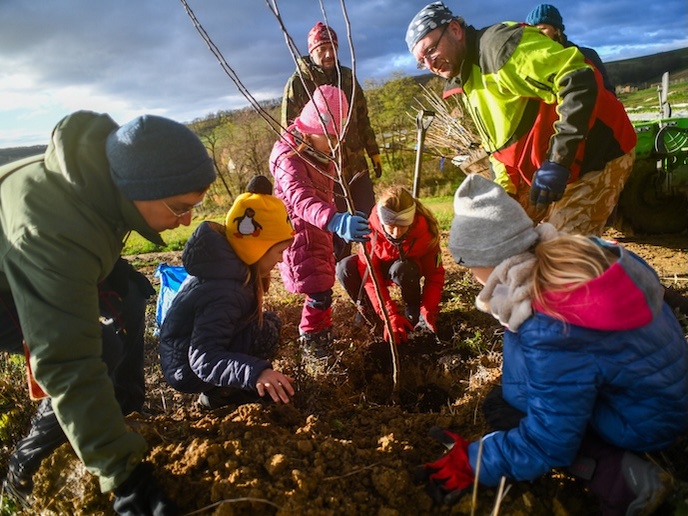
Farmer clusters are collaborative groups that work together to enhance biodiversity and improve environmental outcomes. Supported by a trained facilitator, they enable farmers to share knowledge, coordinate actions and co design measures tailored to their local context. “Clusters often operate alongside citizens, scientists and other stakeholders, forming a bridge between practical farming, ecological monitoring and applied research,” explains FRAMEwork(opens in new window) project coordinator Graham Begg from the James Hutton Institute(opens in new window) in the United Kingdom. “Coordinated actions might include hedgerow planting, wildflower strips or changes in mowing regimes implemented across the cluster farms.”
Addressing challenges facing European agriculture
The EU-funded FRAMEwork project was launched to harness the potential of these farmer clusters, to address key challenges facing European agriculture. These challenges include biodiversity decline driven by conventional agricultural systems. “Agricultural intensification, landscape simplification and widespread loss of semi natural habitats have contributed to ongoing declines in farmland biodiversity,” says Begg. “This threatens essential ecosystem services and the resilience of food systems.” Other challenges include the fact that although biodiversity friendly farming practices are well understood, their effectiveness has been relatively limited across Europe. Farmers often lack the economic capacity to take risks, as well as access to trusted, localised advice.
Integrated monitoring and citizen science
FRAMEwork brought together farmers along with facilitators and advisors, ecologists, local communities and policymakers, to co-design biodiversity interventions. “We wanted to ensure that clusters could function effectively in their local social and cultural contexts,” explains Begg. To achieve this, the project introduced integrated monitoring, combining expert surveys, farmer observations and citizen science. Decision support tools were used to help assess ecological conditions and explore management options. An online hub, Recodo(opens in new window), was developed to support data sharing between clusters, training and dissemination of good practices. The project was able to show that farmer clusters can operate effectively across a wide variety of European farming systems and cultural contexts. “Indications are that interventions were more successful when used in a targeted way,” notes Begg. “We have also improved our understanding of issues like collaborative governance, farmer motivation and behavioural drivers.” Training, facilitation and cluster level governance were shown to strengthen collective action, allowing farmers to take ownership of environmental goals. The project was also successful in establishing harmonised biodiversity monitoring protocols and expanding the use of digital tools.
Transitioning to biodiversity sensitive farming
FRAMEwork successfully created and tested a comprehensive system that integrates social structures, digital tools, ecological monitoring and policy engagement into a single, coherent approach to landscape scale biodiversity management. “This whole system integration is one of the project’s most distinctive contributions to European agricultural innovation,” remarks Begg. Next steps include refining governance models for different cluster types and continuing to streamline monitoring protocols and improve the usability of digital decision support tools. The project team also wants to further deepen the integration of citizen science and farmer friendly monitoring practices. In doing so, the project team hopes to contribute towards the recovery of farmland biodiversity through coordinated, evidence based action and greater public participation. This work represents a cultural shift toward stewardship, with farmers recognised as key actors in biodiversity protection. Enhanced resilience also means improved ecosystem services such as pollination, soil health, water regulation and natural pest control. “The project leaves behind a replicable, community driven model for transitioning European agriculture towards biodiversity sensitive farming,” says Begg. “This will help to support both ecological sustainability and viable rural economies.”