Numts and heteroplasmy are the bees’ knees

Don’t know your numts from your heteroplasmy? Not to worry. Most scientists have a limited understanding of them too. “Despite the widespread use of mitochondrial DNA as the most common molecular marker in evolutionary biology, the evolutionary origins, prevalence and consequences of numts and heteroplasmy in non-model organisms remain largely unknown,” says Elaine Françoso, a researcher specialising in genetics and evolution of bees at Royal Holloway University of London(opens in new window). Helping to fill this knowledge gap is the EU-funded EVOBOMICS project. “By delivering the first comparative, genome-scale analysis of both phenomena in non-model organisms, the project substantially improves the reliability of studies that rely on mitochondrial DNA,” adds Françoso, the project’s principal investigator.
Researchers turn to bumblebees
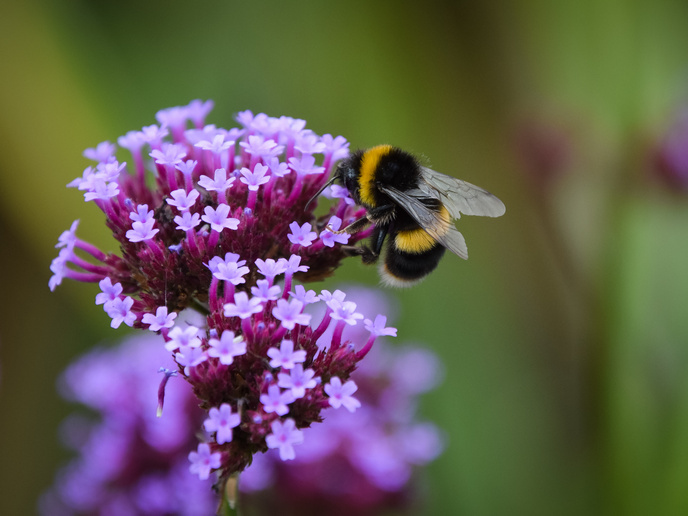
As Françoso explains, nuclear mitochondrial pseudogenes, or numts, are non-functional copies of genes of mitochondrial origin that are found in the nuclear genome. Heteroplasmy, on the other hand, is the presence of different mitochondrial genotypes in the same organism. EVOBOMICS, which received support from the Marie Skłodowska-Curie Actions(opens in new window) programme, wanted to know how the two phenomena evolved. To do that, researchers turned to bumblebees. “While it is generally believed that numts and mitochondrial heteroplasmy are rare in bumblebees, our prior research indicated otherwise,” explains Françoso. To confirm this hunch, the project used long-read sequencing technologies to generate high-quality nuclear and mitochondrial genomes for multiple bumblebee species. This allowed researchers to accurately identify, distinguish and analyse numts and heteroplasmy within an explicit evolutionary framework.
Potentially useful molecular markers
This research confirmed not only that numts are widespread in bumblebees, but also that they could serve as useful molecular markers. In addition, analyses of mitochondrial heteroplasmy indicated that it might function as a mechanism for maintaining mitochondrial genetic diversity, which could contribute to coadaptation between the mitochondrial and nuclear genes involved in mitochondrial function. According to Françoso, these observations suggest a possible role for heteroplasmy in species distribution and diversification. “Our results imply that heteroplasmy is not merely a frequent feature of mitochondrial genomes in bees, and likely in other organisms as well, but may represent an evolutionarily maintained trait that preserves genetic diversity,” she notes. “This diversity could, in turn, influence how species adapt to different environments, potentially shaping patterns of species distribution.”
A launch pad for future research
In addition to its scientific findings, EVOBOMICS serves as a launch pad for future research. “By establishing best practices for the joint analysis of mitochondrial and nuclear genomes, the project will support similar studies in other organisms, including plants, animals and humans,” concludes Françoso. “It will also facilitate an improved understanding of numts and heteroplasmy-related diseases by placing them in a broader evolutionary context.” Françoso plans to continue her research on mitochondrial genome evolution, with a specific focus on how heteroplasmy and mitonuclear interactions influence species diversification, adaptation and speciation.