Putting forest restoration into practice across the EU

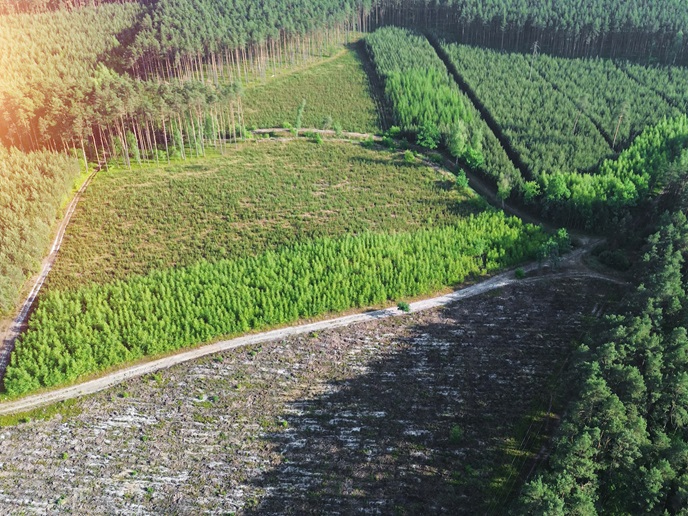
The SUPERB(opens in new window) project aimed to restore thousands of hectares of forest landscape across Europe by providing decision makers with practical, multidisciplinary knowledge to support informed choices on biodiversity, ecosystem services and carbon sequestration. The project embraced a broad view of restoration, from rewilding and restoring native ecosystems to more sustainable, biodiversity-friendly and climate-adaptive forest management. It also examined governance, financing models and social acceptance as factors influencing whether restoration efforts can be sustained over time.
Restoration across diverse landscapes
A consortium of 36 partners from 16 European countries set up 12 demonstration areas across Europe that spanned different biogeographical regions and socio-economic contexts. These diverse pilot sites allowed the project to test restoration in areas facing different types of degradation and forest management practices along with local stakeholder priorities. In France, partners integrated biodiverse hedgerows into plantation forests, while in Romania, they began converting plantation forests back to native ecosystems, with a long-term ambition of establishing a national park. “From the very beginning, we saw restoration as an adaptive, forward-looking process,” explains project coordinator Elisabeth Schatzdorfer, principal scientist at the European Forest Institute(opens in new window). “It responds to rapidly changing environmental conditions and evolving societal expectations.” Along with hands-on activities in the demonstration areas, the project delved into how restoration can be financed, by looking at costs, funding gaps and the role of public money, and voluntary nature markets. Their results showed that private investment alone can’t cover the costs, and that public intervention is necessary to ensure demand and provide continuity. SUPERB also examined public perceptions of restoration. While support for forest recovery is generally high, some stakeholders raised concerns about access rights, including mushroom picking, berry harvesting and hunting. According to Schatzdorfer, these concerns and trade-offs need to be addressed transparently in line with the EU Nature Restoration Regulation(opens in new window).
Turning research into practical guidance
To make all of its findings accessible, the project developed the multi-language Forest Knowledge Gateway(opens in new window), a platform that now shares results and practical guidance for stakeholders. It provides tailored information for policy actors, investors, planners and implementers, as well as small-scale landowners, drawing on resources from SUPERB and other relevant projects and initiatives. “It was intended to be permanent,” says Schatzdorfer. “From the outset, we designed the Gateway as a long-term resource that would support restoration and sustainable forest management across Europe.” Other Horizon projects are already using the platform. TRANSFORMIT, dedicated to integrative forest management (IFM), is expanding the Gateway’s scope to include IFM-related knowledge.
Supporting restoration in policy
Aside from the Gateway itself, SUPERB produced practical outputs to support restoration efforts. A ‘Lessons Learned’ booklet brings together insights from all 12 demonstration areas, highlighting what worked and some of the challenges they faced. It also produced policy briefs setting out recommendations for policymakers, along with practical guidance on monitoring, restoration techniques and upscaling strategies. SUPERB brought together practitioners, policymakers, financiers and researchers through a series of Forest Restoration Talks(opens in new window) and stakeholder workshops from the demonstration areas to EU level, supporting exchange across sectors and regions. Additionally, the team engaged with national authorities working on National Restoration Plans at the high-level policy event ‘Supporting National Restoration Plan Development’ in Brussels in March 2025. The project ended in November 2025, but its results are already being incorporated into external knowledge platforms. At international level, the UN Food and Agriculture Organization’s FERM platform is using SUPERB’s Good Practices as an additional source, extending their visibility beyond the EU.