



Strengthening Europe’s taxonomic capacity

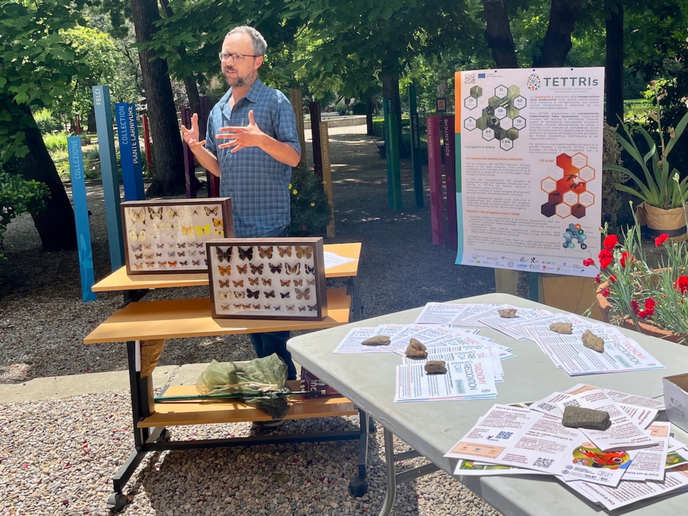
Biodiversity loss is accelerating worldwide, yet efforts to protect ecosystems often stumble over a basic obstacle: insufficient taxonomic knowledge. Knowing which species exist, where they occur and how they change is fundamental for conservation, regulation and sustainable use. However, taxonomy as a discipline has been steadily losing capacity, with fewer trained experts, fragmented resources and limited visibility in policy and education.
Advancing taxonomy capacity
The EU-funded TETTRIs(opens in new window) project aims to reverse this decline by strengthening taxonomy as an instrumental science for biodiversity conservation. Its ambition was to fill knowledge gaps and build lasting systems that support taxonomic research, training and career pathways. The project brought together 17 partners, including leading taxonomic institutions unified under the Consortium of European Taxonomic Facilities (CETAF)(opens in new window), the European Citizen Science Association (ECSA)(opens in new window), linked research infrastructures, the Catalogue of Life (CoL)(opens in new window) and the Distributed System of Scientific Collections (DiSSCo)(opens in new window), as well as practitioners close to biodiversity hotspots. “With TETTRIs, we wanted to transform how taxonomy is practised, supported and valued by investing in people, tools and systems,” explains Ana Casino, executive director of CETAF and TETTRIs technical coordinator.
A marketplace for taxonomic resources
A central innovation of TETTRIs is the taxonomic e-services and expertise marketplace, a web-based platform that provides a structured entry point to taxonomic capacity across Europe. Rather than hosting raw data, it connects users to experts and services, making expertise visible, searchable and traceable. Researchers, practitioners and policymakers can search expert profiles and taxonomic services using harmonised metadata, matching needs such as species identification, access to collections or applied biodiversity assessments. On the supply side, taxonomists and institutions register their expertise following standardised workflows, improving consistency and interoperability. “The marketplace aims to improve the visibility, accessibility and traceability of taxonomic capacity, supporting more efficient connections between research, policy and applied biodiversity needs,” highlights Casino.
Training the next generation of taxonomists
Capacity building formed the second pillar of TETTRIs. Training activities responded to real-world needs, combining academic rigour with field-based practice and public participation in science. Programmes ranged from e-learning resources and mentoring to laboratory and field training, targeting students, early-career researchers, professionals and volunteers. A key achievement was the development of ‘train the trainers’ courses on soil and freshwater fauna and pollinators. These courses combined online learning with hands-on training in biodiversity hotspots. Additional workshops and summer schools introduced participants to innovative tools such as molecular methods, AI-based imaging and sound recognition. “Our goal was sustainable knowledge transfer,” emphasises Casino.
From awareness to policy impact
Beyond research and training, TETTRIs invested heavily in awareness-raising and policy engagement. The annual Taxonomy Recognition Day(opens in new window) grew into a global communication campaign under the banner #NameItToSaveIt, increasing visibility for taxonomy among citizens, industry and decision-makers. A set of 10 policy briefs and a comprehensive blueprint translating lessons learned into practical recommendations for supporting and advancing taxonomic capacity, together with the successful funding of satellite projects, demonstrate how targeted investment can generate tangible impact. As TETTRIs concludes, its results will be carried forward providing a roadmap for embedding taxonomy more firmly into research, governance and education.