Building better biodiversity monitoring systems for farmers

Through pollination and pest control, many species have a positive impact on farming. But unsustainable agricultural practices are responsible for reduced biodiversity on cultivated land, undercutting the valuable contributions of insects and other organisms to food production. The EU-funded BioMonitor4CAP(opens in new window) project has introduced several new technologies, many of them nearly autonomous, to create a strong database of biodiversity observations. The project aims to improve biodiversity monitoring systems and empower evidence-based decision-making by policy makers and farmers.
A range of agro-ecosystems
With a consortium of 23 partners from 10 countries, BioMonitor4CAP sought to test instruments in a variety of landscapes. The project is focused on improving observations in four key areas: land cover, soils, insects and birds. Test sites are located in nine European countries and Peru, a country with very high biodiversity. Field sites include vineyards, grassland, coastal heathland, agro-forestry and field crops. The variety of landscapes provides a broad view of biodiversity in agricultural contexts but also helps researchers identify which methods perform best under different conditions.
New tools in biodiversity monitoring
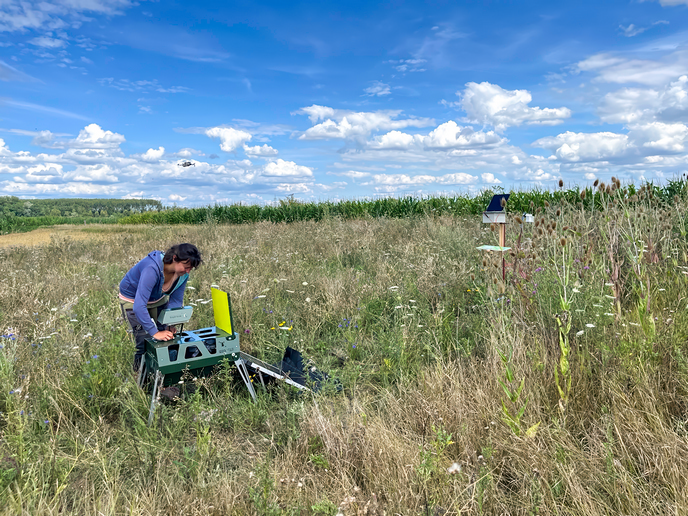
Existing monitoring systems indicate that agriculture practices can have a negative impact on biodiversity. For example, the farmland bird index(opens in new window) shows a 42 % decline in farmland bird populations over the past three decades. But to better understand – and mitigate – the interplay between biodiversity and agriculture, more advanced monitoring systems are needed. BioMonitor4CAP has gathered information using a variety of optical and acoustic sensors, drones and passive collections traps. “We have used hundreds of small, light-weight time-lapse cameras to photograph insects visiting plants and deployed hundreds of acoustic sensors(opens in new window) to record bird songs. These devices are easy to install and compatible with agricultural operations,” explains project coordinator Christoph Scherber. AI-powered identification and molecular characterisation of soil samples also improve monitoring systems. “We have used a new molecular biodiversity technique called environmental DNA (eDNA) to develop soil biodiversity indicators, including metrics for species richness and community composition,” Scherber shares. “Samples can be taken by anyone, preserved in a special buffer solution, and can be transported across Europe without requiring a cold chain for transportation.”
Stakeholder engagement to improve agricultural practices
Farmers care about the land and want to know more about biodiversity and how to move away from unsustainable practices. However, farming is labour-intensive and stakeholders need tools that will not add to their workload. Many of the devices introduced by BioMonitor4CAP do not require human interaction once installed. Cameras and microphones provide information for AI-based identification, and drones, which can carry these sensors to remote locations, extend monitoring systems to hard-to-reach locations. The project’s website hosts an agrodiversity database where users can explore biodiversity observations and indicators. Through conferences, workshops and scientific publications, BioMonitor4CAP seeks to disseminate the project’s work and encourage its replication. Leveraging eDNA and other new technologies, BioMonitor4CAP points the way to improved agricultural practices. Solutions include reduced chemical output, high nature value farming, crop diversification and integrating trees into pastures and fields. As Scherber says: “We urgently need affordable monitoring technologies for farmland. The project has allowed us to test hundreds of devices and exciting new technologies across Europe, paving the way towards results-based agri-environment strategies in the future.”