A web tool for smart historic buildings


The EU-funded SMARTeeSTORY(opens in new window) project has launched a new Smart Readiness Indicator (SRI(opens in new window) Calculation Web Tool) to help speed up the digital and energy transition of Europe’s non-residential historic buildings. The tool helps building owners, energy experts and public authorities assess how ready historic buildings are to adopt smart technologies while still respecting their unique identities. Historical buildings are important landmarks reflecting Europe’s diverse cultural identity, so improving their energy performance without damaging historical integrity is a challenge. Developed by SMARTeeSTORY partner TECNALIA, Spain, and further enhanced in collaboration with project coordinator RINA Consulting, Italy, the web-based tool is aimed at achieving precisely that. It provides a user-friendly interface for assessing smart readiness. It also helps users set targets based on economic, energy or environmental priorities, provides tailored suggestions for smart solutions to increase SRI scores, and also includes a financial module offering high-level estimates of savings and cost-effectiveness. The tool is based on Method B – Expert SRI Assessment, as defined in the European Commission’s official SRI framework(opens in new window).
Testing on real buildings
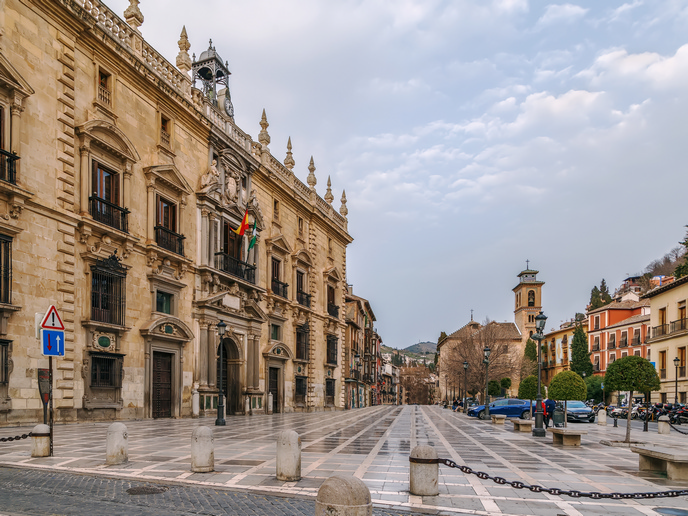
The SMARTeeSTORY web tool was tested on historic non-residential buildings in three locations with diverse geographical and climatic conditions: Riga City Hall in Latvia, Delft University of Technology’s Faculty of Architecture in the Netherlands and the Royal Chancellery of Granada in Spain. The tool was used to assess both baseline and post-intervention scenarios for the three heritage-protected buildings. “The analysis showed substantial improvements in smart readiness. After the project intervention, Riga is expected to reach an SRI score of 83% and Delft 77%, while Granada is projected to reach 71%, corresponding to readiness class B,” reports an ‘idw’ news item(opens in new window). “The results confirm that, although achieving a perfect SRI score is rarely feasible in real buildings, historic buildings can still reach high levels of smart readiness through carefully selected digital upgrades.” While tailored to historic buildings, the web tool is also applicable to other types of buildings, thus ensuring scalability across the European building stock. It can be used by building owners and facility managers, energy auditors, and SRI assessors, architects, engineers and researchers, as well as municipalities and other public authorities, to make informed decisions on planned renovations.
Smart progress in Granada
All smart systems have now been validated and activated in the demo site in Granada. Once the power devices, smart blinds, photovoltaics, sensors and local network connections for the automation systems were installed, Italian project partner Schneider Electric performed the commissioning and start-up. “The automation server is now generating and storing data locally, data that will play a crucial role in supporting the next phases of the project,” reports another news item(opens in new window) posted on the SMARTeeSTORY (Integrated, interoperable, smart and user-centred building automation and control system for better energy performance of non-residential historic buildings coupling physics & data-based approaches) website. “In the upcoming monitoring phase, data will be collected from the system to inform how Granada’s Royal Chancellery building progresses in becoming a smart heritage building.” For more information, please see: SMARTeeSTORY project website(opens in new window)