Understanding the roots of gender-biased behaviours

Many gender-biased cultural practices exist around the world, including accusations of witchcraft, female workload discrimination and sending men to war. These behaviours are described as ‘evolutionary puzzles’: evolutionary models assume that fitness should be maximised, and such examples often don’t make sense on that basis. “Females working harder than males is a cost to them – why is this evolutionarily stable?” says Ruth Mace, an anthropologist at University College London. “Fighting a war is a risk to life for the public good – so why go? Witchcraft accusations do not seem to be based on anything, so why is that so common?” Through the EvoBias(opens in new window) project, which was funded by the European Research Council(opens in new window), Mace and her team sought to explore these phenomena more deeply. The project searched for the reasons behind these harmful behaviours, through evolutionary demography, a field that combines evolutionary theory with the study of births, deaths and behaviours. “Overall a theme through all the various practices we worked on was taking a much more ecological and cost-benefit view to try and understand the basis of cultural practices,” notes Mace.
Exploring demographics in Mexico, Tibet and the United Kingdom
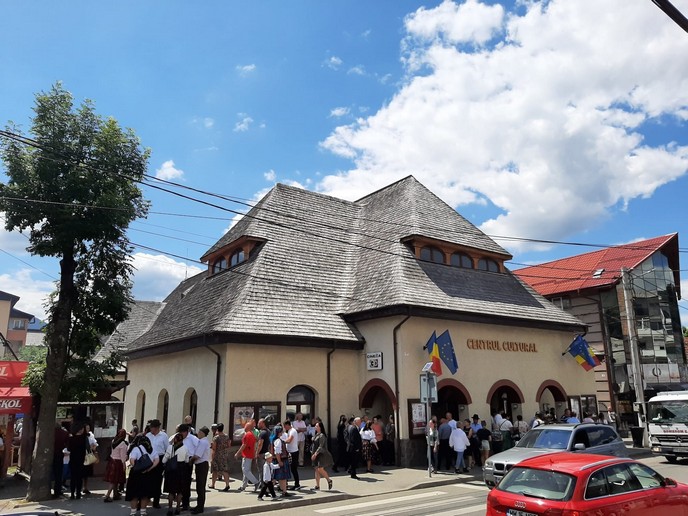
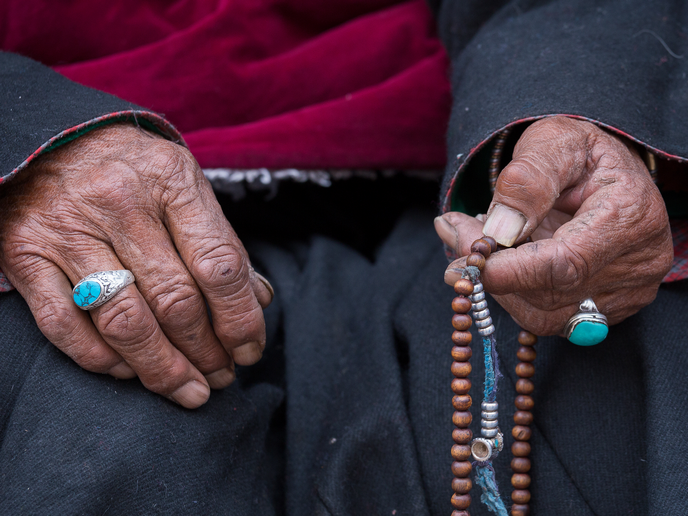
The researchers conducted fieldwork in Tibet, collecting demographic data in villages that showed where sex ratio was female-biased and women had a higher workload(opens in new window) – this was actually quite common due to high rates of males becoming monks and going to the monastery. “We interpret this as a reduced bargaining power, as males are in short supply – so leaving women with fewer options in the marriage market,” explains Mace. “We have also been exploring the role of sex ratio in the United Kingdom and Mexico, using economic games,” she says.
Linking local gender-based behaviours with global samples
The team found clear links between religious celibacy and the costs of marriage for each sex. The modelling revealed how competition between brothers, caused by bride price (associated with polygyny), leads to more monks. On the other hand, dowry (marriage payments to the groom’s family, associated with monogamy) leads to competition between sisters, and more nuns. The researchers tested this empirically by creating a global sample across cultures, which confirmed their findings(opens in new window). “Hence a cultural practice is linked back to marriage practices, in a clear example of a demographic origin of sex-biased cultural practices,” notes Mace. The researchers carried out a similar analysis with witchcraft accusations(opens in new window), again showing that patterns of accusation can be explained by a cost-benefit trade-off to the accuser, again linking cultural practices. Nomadic societies were also found to have fewer witchcraft beliefs than settled societies. And the team showed how globally honour-based violence and ‘honour killing’(opens in new window) is strongly associated with cousin marriage across cultures. “A repeated finding is that those costs and benefits often arise due to competition within the family, not just a case of male abuse of power as is often assumed,” she remarks.
Finding answers for other evolutionary puzzles
The team are still working on the datasets, and results will be published in the future, including on bride kidnapping and ‘third gender’ roles and workloads in Mexico. Mace is exploring another evolutionary mystery, to find out why fertility is falling to such low levels. Mace has also written a book aimed at both academic and public audiences, which is currently in review, provisionally entitled ‘Counting Babies’, which highlights the value of the project’s framework of evolutionary demography.