Changing Europe’s relationship with packaging

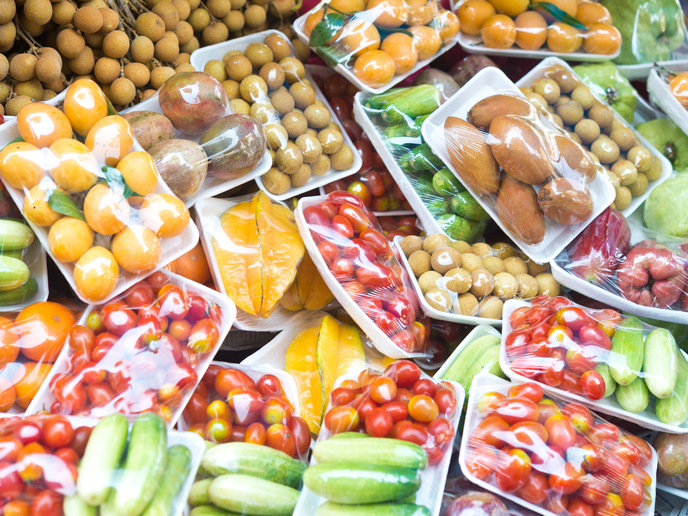
Over a third of solid waste in EU towns comes from packaging. Plastics are the most widely used material, and research suggests the biggest reductions can come from changing the use of multilayer and multimaterial packaging. While many initiatives have been launched to meet this challenge, progress has remained slow due to the complexity of tackling it. Against this backdrop, retailers have an important opportunity to rethink their delivery chains and drive systemic change. The EU-funded R3PACK(opens in new window) project explored the potential for fast and extensive uptake of cost-effective innovative technologies that can substitute multilayer plastic packaging with fibre-based alternatives. The project also researched ways to optimise reuse schemes at a large scale. “Reuse aims to define an economically and environmentally optimised organisation model for returnable packaging, based on systemic regional circular approaches,” explains Frank Gana, deputy CEO and co-founder of (RE)SET. “Substitution aims to develop industrial renewable, recyclable and compostable fibre-based food packaging with at least 80 % cellulose content.”
Optimising innovative packaging solutions
Over 42 months, R3PACK researchers developed new technical solutions to reduce single-use plastic in food packaging, including food safety validation, material and packaging development, industrial trials and extensive consumer engagement. “This led to robust results and clear recommendations for the large-scale deployment of reuse and substitution solutions,” remarks Gana. For reusable packaging systems, a selection process of around 250 existing packaging formats led to 64 standardised reusable options. These were tested and found not to be suitable, so new packaging was fully developed for the project. The team developed food safety and washing protocols, which were tested to simulate reuse cycles in accordance with European regulations. A mathematical model was designed to identify optimal locations for production, washing and distribution under various simulated transport flows. “The reuse system was progressively tested in retail environments, expanding to 20 stores and nearly 30 product references,” says Gana. R3PACK experts also produced a series of fibre-based packaging prototypes, tested for various structural characteristics, including bending and sealing strength, using tests ranging from dye and microscopy to pilot equipment. “The most promising prototypes achieved competitive performance compared with conventional materials with more than 80 % paper and from 90 % to 100 % bio-based content,” notes Estelle Doineau, senior technical consultant at (RE)SET. “These innovations lay the groundwork for large-scale transition and long-term reduction of plastic packaging generation.”
Clarifying the packaging landscape
The team also developed a series of policy recommendations to enable scaling of reuse and fibre-based solutions. “Our main contribution lies in clarifying what is technically feasible today, what remains constrained, and under which conditions large-scale deployment could become realistic,” explains Gana. The researchers also quantified the main economic and environmental drivers behind the solutions, and created transition scenarios through to 2040. These showed how the market share of reuse and fibre-based packaging could reach substantial levels through harmonised European frameworks and shared infrastructure.
A foundation for scaling circular packaging
R3PACK offered a realistic foundation to assess the potential for scaling circular packaging across Europe – identifying both opportunities and structural challenges. “Circular packaging will only scale through coordinated action across regulation, finance, education and standardisation – to achieve the broad structural changes that are needed,” adds Gana. “This will allow Europe to move from experimentation to large-scale implementation and adoption.”