Intelligent robotics helps piece together the past

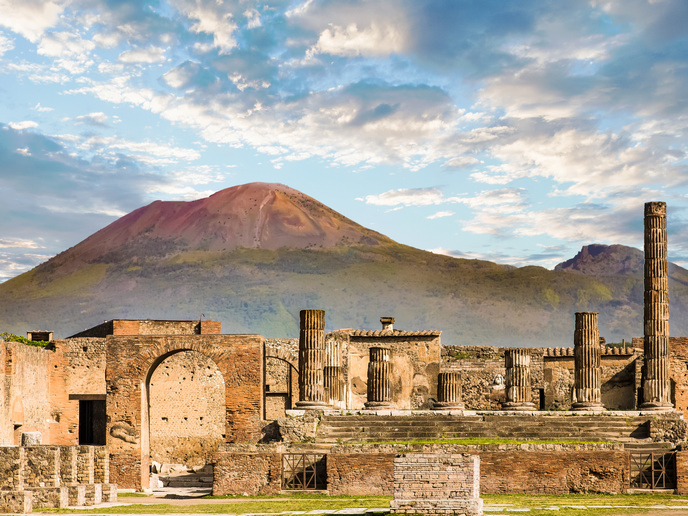
Reconstructing shattered artworks is one of the most labour-intensive procedures in archaeology. Countless artefacts, from vases to frescoes, emerge broken from archaeological digs. This amounts to a complex 3D puzzle – an ancient jigsaw of eroded surfaces and patterns with no reference picture. “Every fragment must be handled with great care under strict conservation standards, since incorrect joins or excessive manipulation can cause irreversible damage,” says Marcello Pelillo, professor of Computer Science at Ca’ Foscari University of Venice. “The combination of uncertainty, fragility and the sheer number of pieces means that manual reconstruction can take months or even years of meticulous work.” The EU-funded RePAIR(opens in new window) project took a new direction: using an intelligent robotics system coupled with artificial intelligence (AI) to autonomously process, match and physically assemble fracture artefacts. The system was tested on iconic case studies from Pompeii, with the aim of restoring two world-renowned frescoes, broken into thousands of pieces.
Reconstructing fragmented artworks
The RePAIR project developed an integrated system combining portable 3D digitisation, AI and a dual-arm robotic platform to support the reconstruction of fragmented artworks. Fragments were first scanned on-site using a dedicated acquisition set-up to produce accurate 3D and colour models. AI algorithms then analyse geometry, surface features and decorative patterns to suggest possible matches, with archaeologists and conservators validating and guiding the process. “Once a reconstruction hypothesis is defined, a robotic system equipped with soft grippers and vision sensors can assist in the careful handling and positioning of fragments,” explains Pelillo. The prototype was tested at the Archaeological Park of Pompeii, including fresco fragments from the House of the Painters at Work(opens in new window) and the Schola Armaturarum(opens in new window).
Reducing human input while keeping experts at the core
One of the most important results of the project was the demonstration of an end-to-end workflow – digitisation, AI-based matching and robotic assistance – that can operate effectively in a real heritage context. The project showed that technology can reduce the time needed to analyse and organise fragments, while keeping experts at the centre of decision-making. Key challenges included managing the fragility of the materials, dealing with incomplete or highly degraded fragments, and addressing the inherent uncertainty of archaeological reconstruction, where not all pieces are available and not all solutions are definitive. “Ensuring safe robotic manipulation and meaningful human oversight were central technical and ethical considerations,” notes Pelillo.
Towards increasingly automated archaeology
Rather than replacing human conservators and archaeologists, the RePAIR team sees the technology as a support tool that, with the help of AI, can help process large quantities of data and propose reconstruction hypotheses more quickly than manual methods alone. Robotics also helps with repetitive or physically demanding handling tasks, speeding up the reconstruction process. “However, interpretation, validation and ethical responsibility remain firmly in human hands,” adds Pelillo. “More broadly, AI and robotics are part of a wider digital transformation in archaeology, where advanced documentation, data analysis and automated assistance are increasingly integrated into research and conservation workflows.” The researchers are continuing the work, by refining the algorithms, improving robotic handling capabilities and exploring applications to other types of fragmented cultural heritage materials. “Further collaborations and trials are expected to expand the methodology to new case studies and contexts, with the aim of integrating these tools more fully into conservation practice and making large-scale reconstruction projects more feasible in the future,” says Pelillo.