



Ancient DNA unveils new insights into life during Iron Age Europe

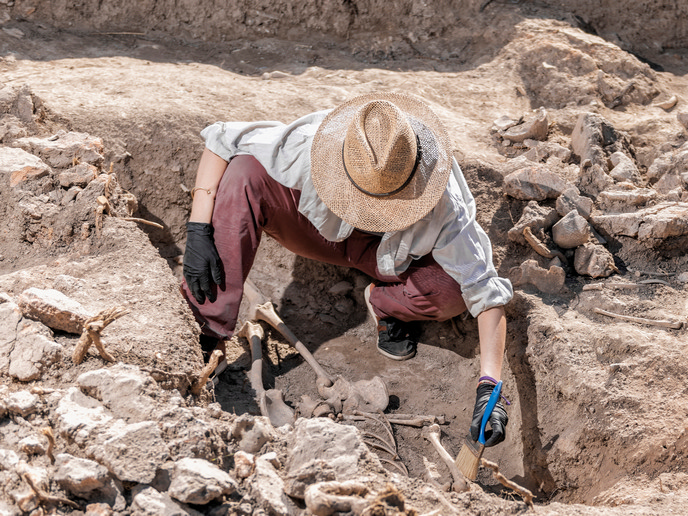
One of the most fundamental questions of humanity is ‘where do we come from’? According to Stephan Schiffels, a researcher in Population Genetics at the Max Planck Institute for Evolutionary Anthropology(opens in new window), the answer to this question can give us confidence about where society is now and where it might be going. “This is particularly true in Europe, where our common roots in genetic ancestry and a rich cultural history is an important foundation for Europe’s present unity and, hopefully, united future,” says Schiffels. Helping answer this question is the MICROSCOPE(opens in new window) project, which was funded by the European Research Council(opens in new window).
Unearthing our origin story using archaeogenetics
With a focus on gaining new insights about life in central Europe during the first millennia BC and AD, the project turned to archaeogenetics, the study of ancient DNA using various molecular genetic methods and DNA resources. “Archaeogenetics allows us to address our origins and ancestry with unprecedented detail,” explains Schiffels, the project’s principal investigator. With archaeogenetics, researchers were able to extract ancient DNA from burial sites across Europe. They then used this DNA to reconstruct the genomes of those humans living during that period.
Migration in medieval Britain
These reconstructed genomes provided valuable insights into migration and relatedness in ancient societies. For instance, they gave evidence of a massive migration wave(opens in new window) that happened in early medieval Britain following the end of Roman administration. “Migrants from present-day Netherlands, northern Germany and southern Denmark soon made up the majority of many English communities,” notes Schiffels. “As this happened, the archaeological record shows varied levels of interaction with locals, with mixed communities – even families – becoming commonplace and different cultural habits living side-by-side.” The impact of this migration is still felt today, with many English people deriving about 40 % of their ancestry from early medieval continental Europe.
Genetic evidence a real game changer
Another important result of the project was the discovery of a power dynasty in Celtic Germany(opens in new window). “We genetically analysed human remains from two of the richest prehistoric burial mounds in central Europe and showed that they were related as uncle and nephew,” remarks Schiffels. The fact that these princes and kings were so closely related suggests that power in this ancient society was passed along family lines, which remains a hallmark of complex hierarchical societies and dynasties, here taking place half a millennium before the peak of the Roman Empire. “This is a level of insight that archaeology alone cannot provide, so genetic evidence was a real game changer here,” adds Schiffels.
Supporting the archaeogenetic community
Not only did this project deliver important archaeological findings, it also contributed to the archaeogenetic community. For example, developing the Poseidon(opens in new window) project, MICROSCOPE researchers built a new infrastructure for research data management and sharing. The MICROSCOPE project further delivered new computational methods that other researchers can use to generate archaeogenetic data and investigate ancestry differences with even finer detail. “Beyond shedding new light on the question of where we came from, I am confident that our work will have a lasting impact on how researchers access and analyse archaeogenetic data,” concludes Schiffels.