



A new mooring system for floating offshore wind turbines

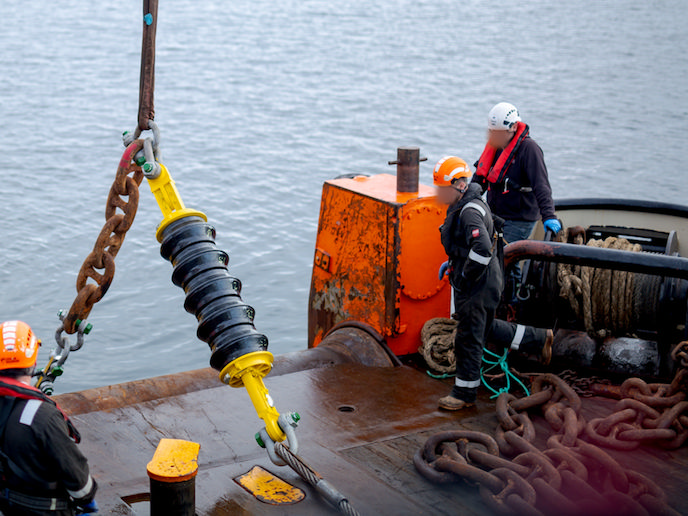
If the EU is to become the world’s first climate-neutral continent by 2050, it must significantly increase its use of renewable energy – including wind energy. Offshore wind in particular has the potential to be a major source of renewable energy. But because most of Europe’s waters are too deep to install fixed-bottom wind turbines, floating turbines have become the infrastructure of choice. “With floating offshore wind solutions, wind power can expand into deep-water areas, often further from shore, opening vast new areas and markets currently unavailable to offshore wind,” says Stephen Peare, chief financial officer at TFI Marine. One of those offshore wind solutions is SeaSpring, an innovative mooring system that TFI Marine developed with the support of such EU-funded projects as FloTEC and FLOTANT. “While these projects allowed us to validate the technology, confirm its benefits, and even manufacture and test the prototype, further development was required to bring the technology to market,” adds Peare. To help fill this gap, the company again turned to EU funding.
A new mooring and monitoring solution
To start, TFI Marine worked with a floating wind turbine platform owner to develop and implement a detailed simulation of the new system. Once the performance parameters were agreed on, the company began developing its new mooring system – a process that included designing a commercial-scale SeaSpring component. The team also delivered new technologies for monitoring the solution’s performance throughout its expected 25+ year operational lifespan.
Ready for installation on a floating offshore wind turbine
Working with many project developers, the TFI Marine team confirmed that, when installed on a 500 MW scale project, the SeaSpring solution results in an average EUR 100 million in savings compared to alternative mooring costs. This equates to around a 5-8 % lower cost of electricity – a saving that will be passed on to the wind turbine’s customers. Based on these findings, the solution was certified by DNV. “This is a huge milestone that gives our customers confidence that our products will continue delivering benefits across their stated lifespan,” notes Peare. Having secured the required regulatory approvals, the mooring solution is now ready for installation on a 2.3 MW floating offshore wind turbine.
An innovative manufacturing process
In addition to the mooring technology, the TfI SeaSprings project, which was funded by the European Innovation Council(opens in new window), allowed TFI Marine to develop a new manufacturing process. As a result, it can now produce the largest, thickest injection-moulded polymer parts in the world. “Without the support of EU funding, we would have had a great idea but not the means of delivering it to the market at the required scale,” explains Peare. The company has filed a series of patent applications for its manufacturing solutions.
Ready to start taking orders
The TfI SeaSprings project also gave TFI Marine the opportunity to network with floating offshore wind turbine manufacturers. By sharing the results of the project to date and highlighting the many benefits of the SeaSpring solution, the company has opened the door to several possible partners. “What started as an idea is now a validated and certified product that is backed by a manufacturing process and supply chain capable of delivering a cost-saving mooring solution to these interested customers,” concludes Peare.