Piloting advanced reuse, repair and recycling approaches in a circular textiles ecosystem

Global clothing consumption is rising, driven by lower costs and rapidly changing trends. Simultaneously, consumers are discarding items much faster with minimal options for circularity. In specialty sectors such as workwear, personal protective equipment and active goods including backpacks and tents, few options are available for reuse, repair and recycling. The EU-funded CISUTAC(opens in new window) project is addressing the pressing need for textile circularity, focusing on polyester and cotton which together account for almost 90 % of textile fibres. Through new processes, business models and value chain collaboration, CISUTAC is showing how textiles can be reused, repaired and recycled at scale.
Putting textile circularity to the test
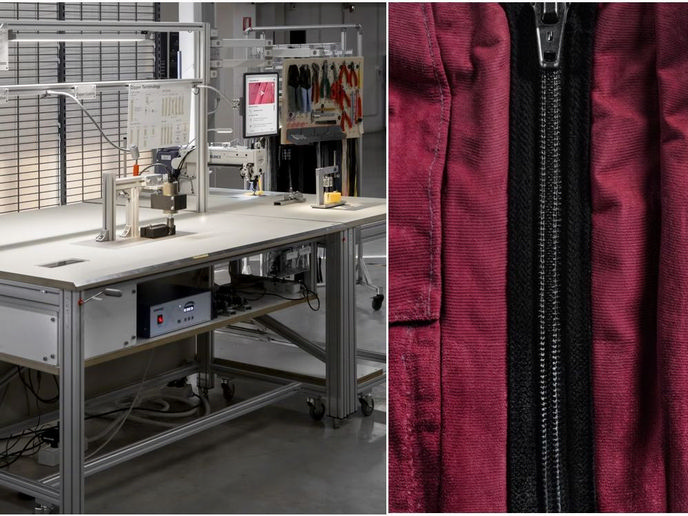
The transition to circular textiles faces persistent barriers. CISUTAC developed and successfully implemented solutions to address several of these through three semi-industrial-scale pilots. Repair is time-consuming, costly and dependent on skilled operators. CISUTAC developed semi-automated approaches that augment human skill and aim to make repair economically viable at scale. “Semi-automated repair and disassembly workstations featuring ‘modular machine augmented assistance’ and visual support were piloted in both a for-profit company and a social enterprise. Zipper repair proved highly promising, consistently completed in under 10 minutes,” explains project co-coordinator Guy Buyle of Centexbel(opens in new window). Disassembly of end-of-life firefighter suits for recovery of high-value aramid fibres was also demonstrated. Consumers’ low donation rates and negative attitudes towards second-hand goods limit reuse, as do inefficient sorting approaches. The project’s consumer awareness campaigns(opens in new window) and AI-supported decision tools(opens in new window) address these barriers. “The sorting pilot equipped human sorters with a decision support tool and ‘digital product passport’ (DPP) data retrieved via radio-frequency identification (RFID) tags. It highlighted the practical value of the future DPP and pointed to AI-supported damage detection as an important next step for accurately routing textiles to reuse, repair or recycling,” says project co-coordinator Lien Van der Schueren, also of Centexbel. CISUTAC’s Open Data Guide(opens in new window) outlines minimum data requirements to prepare for the forthcoming DPP. Historically, poor feedstock quality has made textile-to-textile recycling impractical. CISUTAC’s fibre-to-fibre pilot demonstrated the project’s thermo-mechanical recycling technology for recycling polyester and its hybrid yarn technology for recycling cotton and cellulosic fibres. The former improved quality, with potential for nearly 100 % pure polyester waste textiles. The latter enabled short, recycled cotton fibres – unsuitable for conventional spinning – to be made into good-quality yarns.
Navigating the circular textile revolution
The landscape for a circular textile economy shifted considerably over the course of the project. “Acceptance and uptake of reuse practices accelerated more quickly than anticipated, enabling earlier validation of circular business models. Furthermore, we addressed a clear need to update our AI capabilities, reflecting rapid advances in the field since the project began,” note Buyle and Van der Schueren. On the downside, the bankruptcy of several textile collection and sorting companies underscored that technical progress alone is insufficient without viable business conditions.
Sustainable future for the textile circularity ecosystem
CISUTAC explored four scenarios(opens in new window) for a textile ecosystem of 2035 to help stakeholders in planning. Furthermore, it played a key role in establishing ECOSYSTEX (the European Community of Practice for a Sustainable Textile Ecosystem), which grew out of CISUTAC’s work to align dissemination and policy recommendations across similar EU projects. As CISUTAC wraps up, its legacy is clear. It has elevated repair as a critical pillar of circularity, delivered open tools and resources for informed decision-making and recognised social economy organisations as essential actors in textile circularity. ECOSYSTEX will carry this work forward, enabling long-term collaboration towards a truly circular textile ecosystem in Europe.