Understanding migration from cities to rural areas

People around the world have been drawn to urban centres for many hundreds of years. Yet in recent years, a reversal of sorts has emerged. With the advent of remote work – and through the impacts of the COVID-19 pandemic – a growing migration of millennial ‘digital natives’ is under way from cities to rural areas. “Urban-to-rural mobilities, which have reappeared at different moments in history, have become far more visible since the pandemic,” explains Gökçe Sanul Diner(opens in new window), Marie Skłodowska-Curie Actions(opens in new window) fellow (2024-25) at the Amsterdam Institute for Social Science Research(opens in new window) (AISSR), University of Amsterdam. “Previous research shows they share similar motivations to earlier back-to-the-land movements, but they are now shaped by attempts to build alternative ways of living while remaining connected to urban and digital networks.” Through the HL-EXURB project, Sanul Diner sought to understand this phenomenon, focusing on people working in creative sectors. The work explored how such exurbanites create hybrid lifestyles at the intersection of urban, rural and digital spaces, how these lifestyles reshape community-making and how the cultural impacts can be understood and assessed.
Investigating rural hybrid lifestyles
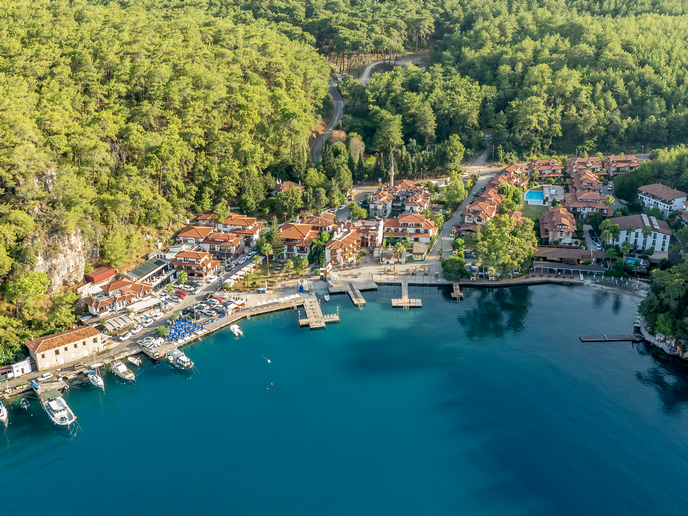
Sanul Diner’s work took her to Akyaka, a small coastal town in southwest Türkiye that has experienced significant inflows of creative exurban residents over the last decade. She combined ethnographic fieldwork with digital research, carrying out extensive observations in everyday settings such as homes, studios, co-working spaces, local markets and cafés, alongside 39 in-depth interviews in Akyaka and the nearby village of Dalyan. Analysis of the digital dimensions of these communities, including WhatsApp and Instagram networks, local initiatives and entrepreneurial networks, revealed how community-making and cultural practices unfold across both physical and digital environments. Sanul Diner also developed a Cultural Impact Assessment Framework, which combined data from Akyaka with systematic literature reviews and comparative analyses of other frameworks. This framework was developed further in collaboration with the European Network of Cultural Centres(opens in new window) (ENCC) Working Group on Non-Urban Culture and included workshops with cultural practitioners across Europe, and exchanges with two municipalities – Valmiera in Latvia and Artés in Spain.
Moving beyond individual choices
One major finding was that the hybrid lifestyles of creative exurbanites are not simply individual lifestyle choices but take shape through different forms of community-making that connect urban, rural and digital spaces. The project also identified three forms of community-making: socio-ecological innovators, who use their creative and digital capital to address local challenges; eco-creative entrepreneurs, who contribute to solidarity-based economies; and digital narrative weavers, who circulate rural knowledge and local stories across translocal networks. These were not automatically inclusive or stable, however. This discovery led to the development of the context-sensitive framework for cultural impact assessment, forming the basis of a practical guideline for local governments and cultural practitioners.
A solution for rural decline?
Urban-to-rural relocation trends are increasingly seen as promising resources for rural futures and regional resilience, particularly in light of the rural decline seen in many areas across Europe. But creative exurbanites shouldn’t be considered an automatic solution, notes Sanul Diner. “Ultimately, the key question is not simply how to attract more people, but how to create the conditions for a more cooperative engagement of creative exurbanites with local communities, by meaningfully connecting digital and creative capacities with rural knowledge and ecological resources,” she says.