From waste to value: the Łódź circular transition

Poland’s Łódź region has historically relied on carbon-intensive industries, yet it has also been pioneering circular bioeconomy initiatives since the early 2000s. The EU-funded https://frontsh1p.eu/(opens in new window) (FRONTSH1P) project accelerated this transition through technological innovation and a bottom-up co-creation approach that ensures citizen participation remains a permanent element of local governance.
Circular solutions turn waste streams into local value chains
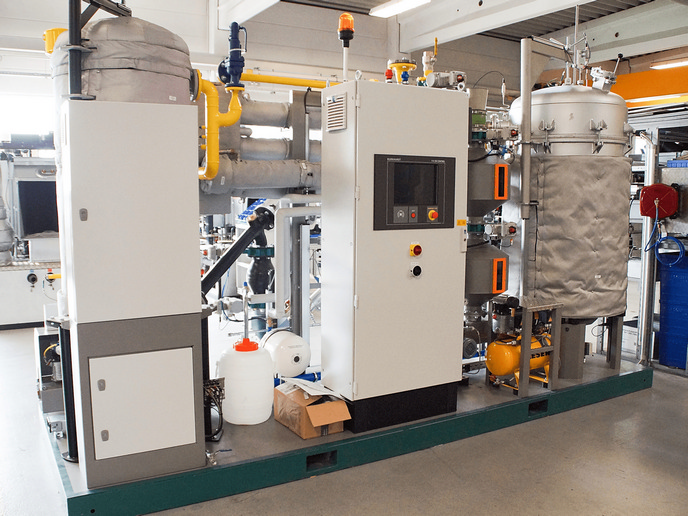
“Our highly accurate process flow models with complete mass and energy balances for entire value chains supported the development of tailored circular solutions. Each addressed a specific bioeconomy sector while generating broader community and economic benefits,” says project coordinator Kamil Maszczyk of K-FLEX. The Regional Circularity Booster Toolkit standardised data sharing across stakeholders, enabling cost-saving industrial symbiosis. Its life cycle assessment methodology helped align goals with local laws. The project developed solutions in four key areas: wood packaging, plastic and rubber waste, food and feed, and water and nutrients. By integrating these solutions via existing regional industries, farms and municipalities, FRONTSH1P created a territorial ecosystem supporting a circular bioeconomy. For example, at facilities such as K-FLEX, a project partner and leading insulation manufacturer in Łódź, processes for wood gasification and the thermal pyrolysis of plastics were embedded in existing operations. Discarded wood pallets and difficult-to-recycle rubber factory scraps were processed on site to generate decarbonised syngas for regional heating and create new, eco-friendly building insulation. Post-combustion carbon capture during syngas production was used to produce the insulation. In Parzęczew, food and feed solutions were coupled with solutions targeting water and nutrients. Organic waste was diverted from landfill and transformed into compostable bioplastics, compost biostimulants and biolubricants to substitute petroleum-derived feedstocks and regenerate degraded soils. Wastewater was treated on site and recovered nutrients were returned to local farmland.
Bottom-up methodology relying on local cooperation
The project focused heavily on community-based innovation schemes, circular neighbourhood activity spaces, social enterprise and inclusion. “FRONTSH1P demonstrated that community-led initiatives and regional circularity clusters can overcome local market failures and behavioural resistance more effectively than traditional top-down mandates,” explains Maszczyk. Circular regional clusters united local government, businesses, academia and civil society in structured social dialogue, ensuring that policies and business models were tailored to the local context before deployment. This permanent feedback pathway from citizens to policy makers is supporting continuous refinement of Łódź’s circular economy action plan, keeping policies responsive to markets and community realities. Circular neighbourhood activity spaces gave residents a direct voice in co-designing waste collection systems, while digital gamification raised awareness on food waste and resource conservation.
Replication and its benefits for Europe and its diverse regions
“A common critique in environmental research is that highly localised sustainability projects cannot be successfully transferred to different cultures or economies. FRONTSH1P shattered this notion by replicating the Poland-centred frameworks in regions of Greece, Italy, the Netherlands and Portugal,” underscores Maszczyk. Tools such as the Regional Circularity Booster Toolkit allow different regions to adapt the data and governance structures to fit their unique industrial and cultural conditions. The circular solutions deliver tangible benefits across the board. Businesses cut waste disposal costs and reduce dependence on imported virgin materials while farmers gain resilience through locally produced fertilisers and healthier soils. Local economies attract green investment while generating new jobs and enterprises. Citizens gain a direct stake in their communities as well as cleaner, more affordable places to live. “FRONTSH1P demonstrated that circular transition, when built on sound technical solutions, strong governance and genuine citizen engagement, is not a policy ambition but a practical, replicable, scalable reality already transforming diverse European territories,” concludes Maszczyk.