Achieving greener farming by turning to nature

There is huge pressure on farmers to use nutrients more efficiently, and to reduce their dependence on synthetic fertilisers. At the same time though, agriculture needs to constantly achieve higher levels of productivity to meet demand and ensure profitability. The goal of the EU-funded ECONUTRI(opens in new window) project was to advance practical, nature-based solutions that could help farmers to achieve these aims. The project also sought to create new business opportunities by supporting circular nutrient management, precision agriculture and digital decision-support systems that improve both environmental sustainability and farm competitiveness. “ECONUTRl focused on improving nutrient recovery from organic wastes, increasing nutrient use efficiency in crop production, reducing emissions and assessing the environmental, economic and societal impacts of these innovations,” explains ECONUTRI project coordinator Dimitrios Savvas from the Agricultural University of Athens(opens in new window).
Farming technologies and nature-based solutions
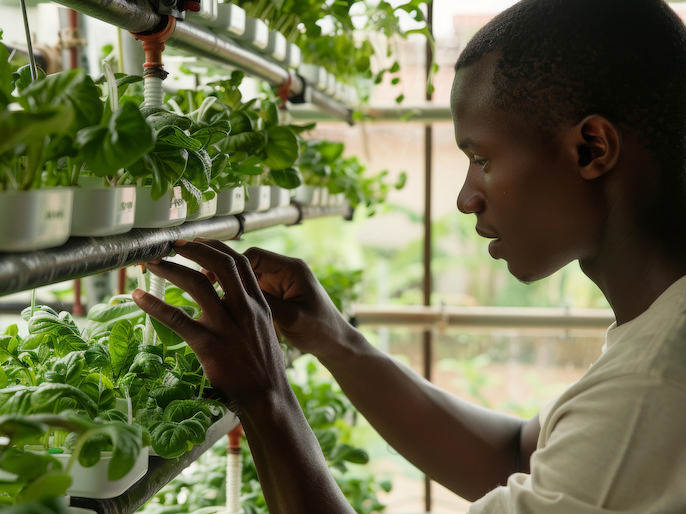
In practice, the project identified and developed a portfolio of 24 innovative technologies and nature-based solutions integrated into a holistic concept. One group of technologies focused on nutrient recovery from manure, digestate and other organic residues, as well as advanced composting systems. A second group of technologies focused on sustainable crop nutrition, including precision fertilisation supported through sensors and hyperspectral imaging to help farmers detect disease, nutrient deficiencies and water stress. Furthermore, smart controlled release fertilisers as well as biofertilisers and technologies to reduce greenhouse gas and ammonia emissions from livestock housing, manure storage and agricultural fields were also identified. “Additional innovations included nutrient recycling using AI-based decision support systems (DSSs) and sensors, and cascade cropping in hydroponic systems,” notes Savvas. Cascade cropping is a sustainable approach where nutrient-rich drainage is reused to irrigate other crops. “Together, these technologies have the potential to promote circular nutrient management while improving resource efficiency and reducing environmental impacts,” adds Savvas.
Diverse agricultural system trials
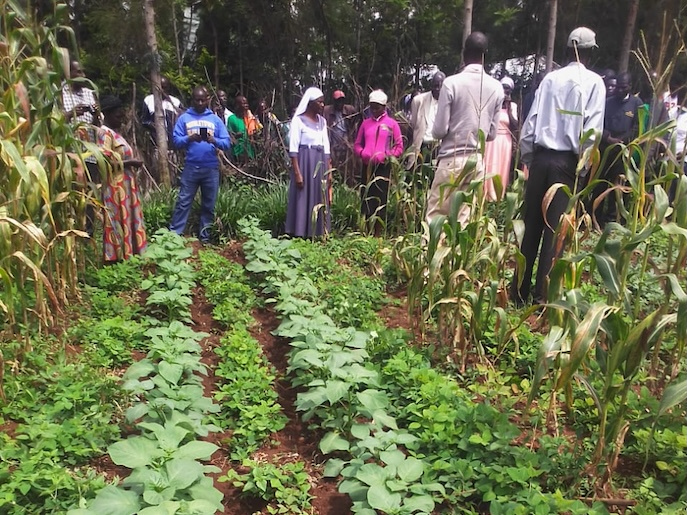
The technologies were optimised and validated through laboratory experiments, open-field and greenhouse trials, pilot installations and full-scale field demonstrations across diverse agricultural systems in Europe and China. Validation took place in commercial farms, research stations and demonstration sites covering field crops, greenhouse vegetables, soil-less cultivation and livestock production. “Environmental performance was assessed by measuring nutrient losses, emissions, fertiliser efficiency and crop productivity,” notes Savvas. “Life-cycle assessment and socio-economic analyses quantified wider environmental and economic benefits.” Online training, demonstration events and in situ farmer training also provided additional opportunities to test the technologies under practical farming conditions and obtain feedback from end users.
Launch of spin-off company
ECONUTRI successfully demonstrated that substantial reductions in nutrient pollution can be achieved without compromising agricultural productivity. Depending on the technology, nitrogen and phosphorus inputs were reduced by 5-50 %, nitrate leaching by 10-80 % and nutrient losses in soil-less systems by up to 90 %. “The project generated 24 validated technologies(opens in new window), and 26 key exploitable results,” says Savvas. Publications(opens in new window) included an innovation handbook and two policy briefs. “Another major achievement was the establishment of the NUTRISENSE spin-off company,” remarks Savvas. “This will commercialise one of the DSSs developed by the project and demonstrates the project’s strong exploitation potential.” Indeed, several ECONUTRI technologies are ready for wider market uptake. DSSs are available to agricultural enterprises and growers, advisors and other professionals in the agri-food sector. Additional technologies will continue to be validated through follow-up projects and commercial partnerships. “Commercialisation will continue through patenting, use of innovations by industrial partners and licensing agreements, supported by business plans, intellectual property protection and further investment to complete market deployment,” says Savvas.