


Nutrient-rich fertilisers from organic waste and renewable biomass

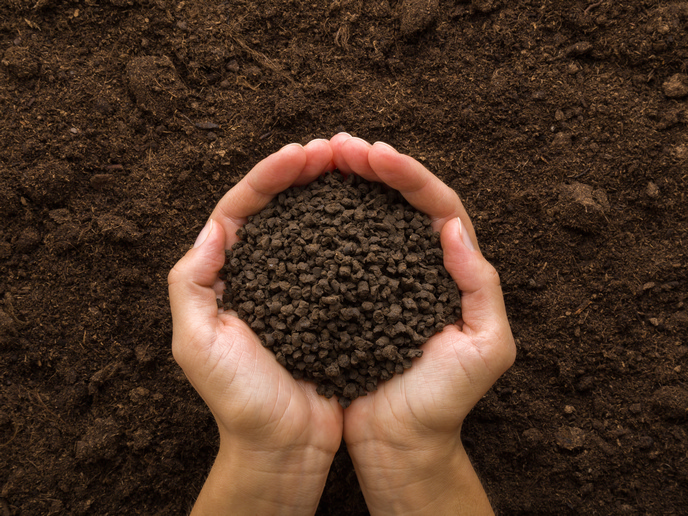
Fertilisers play a significant role in food security, with the EU being largely dependent on imports of mineral and fossil-based fertilisers. Through research and innovation actions, the EU wants to improve the availability and affordability of fertilisers for farmers and food production. BBFs can play a key role in this story. At the same time, the EU’s Vision for Agriculture and Food(opens in new window) plans to reduce synthetic chemical inputs by supporting BBFs, strengthening the EU’s strategic autonomy and resilience by reinforcing domestic production through the local valorisation of farm and forest residues. It will also reduce external dependencies, diversify primary producers’ value streams and accelerate the transition to a decarbonised and circular economy. Recent supply disruptions and price volatility mean that the need to act has become more important than ever. In May 2026, the European Commission published its Fertiliser Action Plan, promoting the short-term affordability and security of supply with longer-term action to strengthen domestic fertiliser production, diversify supply and improve nutrient management.
Environmental and economic benefits
By drawing on a range of Horizon 2020 and Horizon Europe-funded projects, this Pack highlights how understanding and developing BBFs contributes to the EU economy. Benefits include providing farmers with regionally sourced alternatives to synthetic fertilisers that improve soil health and prevent environmental impacts associated with chemical over-application. By valorising different farm and forest residues, agricultural by-products and waste streams, the increased use of BBFs also creates additional revenue streams for primary producers and the wider bio-based value chain. The creation of new value chains based on the local valorisation of biomass also supports job creation, especially in rural areas, as highlighted in the Long-term Vision for Rural Areas(opens in new window). The BBFs also offer major environmental benefits by reducing greenhouse gas emissions, preventing toxic nutrient runoff into waterways, increasing soil organic carbon and restoring soil health.
Building a sustainable, secure food supply
Nutrient-rich BBFs are derived from organic waste and renewable biomass sources to provide a sustainable alternative to traditional mineral and fossil-based fertilisers. They recycle resources such as food waste, animal manure, wastewater sludge and agricultural by-products into safe and usable plant nutrients. They also strengthen Europe’s autonomy and resilience by reinforcing domestic fertiliser production and reducing the agricultural sector’s dependence on resources from outside the EU. The 11 selected projects aid the EU’s transition to a competitive circular economy while supporting the key objectives of the European Green Deal(opens in new window), the EU's Vision for Agriculture and Food and the Bioeconomy strategy. FERTIMANURE recovered nutrients from animal manure to create high-value fertilisers that support the agricultural circular bioeconomy. LEX4BIO tested BBFs derived from organic waste in Europe-wide trials to determine their potential for replacing synthetic fertilisers. NOVAFERT promoted the adoption of safe, sustainable BBFs derived from waste streams to create new rural income streams. NutriBudget developed a platform to help farmers, advisors and policymakers make informed decisions about nutrient management. NUTRICHECK-NET worked with farmers and agricultural advisers to test which crop nutrition tools can genuinely help them make field decisions. RUSTICA converted organic residue from fruits and vegetables into high-quality BBFs, benefiting both the environment and rural economies. SEA2LAND transformed by-products from seafood processing and aquaculture sectors into BBFs. The trans4num project investigated nature-based solutions for sustainable nutrient management across multiple sites in Europe and China. Meanwhile, WalNUT developed technologies to recover nutrients from wastewater and industrial brine, whereas P2GreeN converted nitrogen and phosphorus from human sanitary waste into safe BBFs. Finally, B-FERST developed innovative BBFs from municipal and food biowaste.
