High-efficiency magnetic nanomaterials that do not sacrifice biological safety

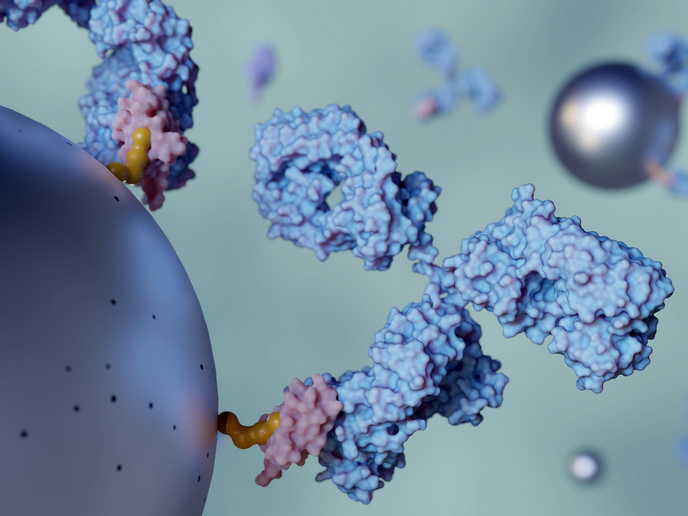
Iron-oxide-based magnetic nanozymes represent a new class of artificial enzymes that mimic natural enzymes beautifully, and they also retain the unique ability to be easily guided and recovered using external magnetic fields. However, predicting and controlling their selectivity, robustness, reproducibility and biological safety in real-world environments is challenging. With funding from the Marie Skłodowska-Curie Actions programme(opens in new window), the NESTOR(opens in new window) project was established to address this bottleneck. “Rather than simply synthesising different nanoparticle materials to optimise individual properties, we focused on learning how to engineer iron-oxide surfaces so that catalytic activity, magnetic response and biological safety could be controlled within a single material platform,” notes project coordinator Gerardo F. Goya.
From empirical trials to a design blueprint
To achieve this, NESTOR shifted the nanozyme field away from a purely empirical, trial-and-error approach towards a robust mechanistic framework. The study revealed how a nanoparticle’s surface features (atomic charge, defects, coatings and magnetic heating) dictate the chemical pathways it uses to either generate or destroy reactive molecules. Specific types of chemical reactions under study included Fenton-like, peroxidase-like and catalase-like processes. This understanding is important as a single material can behave very differently depending on pH, clumping or the surrounding biological environment. By comparing how changes in the cation distribution, redox state and surface structure affect performance and biological response, the team could predict behaviours that were once entirely unexpected. “We recognised early that higher catalytic activity is not always better. Because oxidative stress is a double-edged mechanism, it can be harnessed for antimicrobial action, environmental remediation and cancer-related therapies, but it must be carefully controlled to prevent unintended cellular damage,” explains G. Goya. “To strike a realistic, safe balance between chemical performance and biocompatibility, we systematically evaluated cytotoxicity and genotoxicity in advanced in vitro models.” To map this balance, researchers paired this biological testing with advanced characterisation techniques, including high-resolution electron microscopy, spectroscopic analysis and magnetometry. They also used a multi-tiered approach, evaluating the particles’ ability to generate or modulate reactive oxygen species across different complexity levels, from basic catalytic assays and free-radical detection to testing inside living cells.
Looking at the whole nanoparticle picture
“The main value of NESTOR is that it connected the physical chemistry of magnetic nanoparticles with their biological consequences. We were able to look at nanozymes not only as catalysts but as materials whose surface, magnetic and toxicological properties must be designed together,” outlines the coordinator. G. Goya also explains that a nanoparticle’s surface acts as a dense, magnetically addressable array of redox-active sites. By tuning the iron-oxide’s surface state, researchers can control how electrons transfer to reactive species. “Because these nanozymes are magnetic, they can be activated, guided, separated and reused using external fields. This gives them a massive practical advantage over many conventional catalysts in healthcare, environmental water treatment and industrial biotechnology,” he adds.
Scaling up production and forging new partnerships
The next steps will focus on scaling up material production, standardising nanozyme activity metrics and advancing preclinical validations. “Perhaps the most enduring legacy of NESTOR is its collaborative spirit. The profound human quality and interdisciplinary synergy of the partners helped overcome complex administrative obstacles while also sparking at least seven new collaborative projects,” concludes G. Goya.