Do dreams mean more than we think?

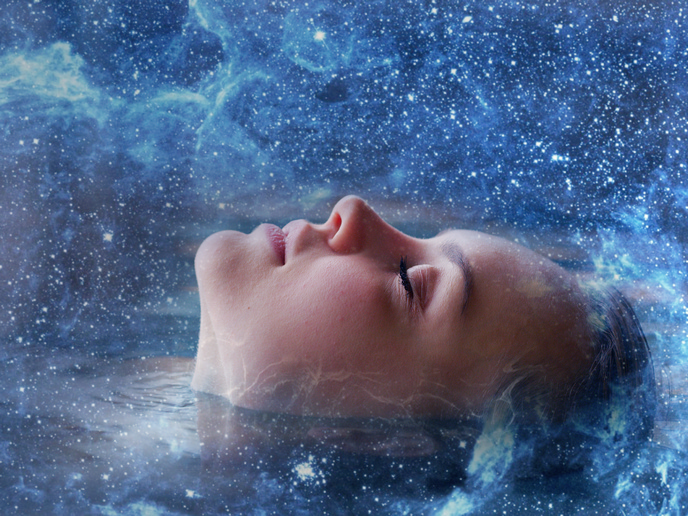
We haven’t yet fully grasped why we spend about a third of our lives in an unconscious state – either sleeping or trying to do so. About a quarter of our total sleep time is spent dreaming. We dream every night, and almost all dreams are forgotten by morning. Unfortunately, they’re not divine messages from the gods as ancient civilisations believed. Most of our dreams feature negative emotions such as anxiety, fear and sadness, rather than joy. But why are some dreams so vivid and real, while others seem vague and make no sense at all?
Sweet dreams are made of this
A research team at the IMT School for Advanced Studies Lucca in Italy showed that both individual traits and shared life experiences heavily influence what we dream about. In other words, dreams aren’t random, they’re sophisticated reflections of our everyday lives. The findings were published in ‘Communications Psychology’(opens in new window). “[S]leep is a state where the brain is more disconnected from the environment compared to wakefulness,” explained lead author and IMT researcher Valentina Elce in a recent Q&A(opens in new window). “So when we’re sleeping, our brain basically is free to explore distant concepts and connections with minimal interference from the outside world. It’s processing all the information that we’ve acquired during the day to allow us to learn new things, to consolidate our memories.” Using natural language processing (NLP) techniques, the researchers analysed and compared more than 3 700 dream experiences from nearly 290 volunteers between the ages of 18 and 70 during the period 2020-2024. Over two weeks, the participants logged their daily experiences while the researchers gathered data on their sleep, brain function, personality and psychological profiles. The team examined factors such as dream interest, how vivid or broken dreams feel, waking life events and how often a person’s mind wanders. The results revealed that dreams don’t simply act as direct replays of daily events. Familiar settings like workplaces and places of study did show up, but they did not match reality. Instead, it looked like the mind was putting its own creative spin on reality.
We are what we dream
Overall, the study showed that weird, broken and constantly changing dreams are linked to a wandering mind. Deep, emotionally powerful dreams were connected to a strong belief in the importance and meaning of dreams. The study also pointed to AI’s potential in dream research, demonstrating that NLP models can reliably capture the meaning and structure of dreams just as accurately as human experts. This paves the way for scalable and reproducible research into consciousness, memory and mental health. “Our findings show that dreams are not just a reflection of past experiences, but a dynamic process shaped by who we are and what we live through,” concluded Elce in an IMT news item(opens in new window). “By combining large-scale data with computational methods, we were able to uncover patterns in dream content that were previously difficult to detect.”