How ecological constraints influenced prehistoric animal husbandry

Rapid climate change is one of the most urgent issues of our time, seriously impacting food production around the world. But this is not the first time that humans have had to adapt to a changing environment. Learning how people in the past responded to warmer temperatures and decreasing water supplies offers insight into how we might adapt to changing climate conditions. The ICARHUS project, funded by the Marie Skłodowska-Curie Actions Programme (MSCA)(opens in new window), used palaeoproteomics(opens in new window), a new molecular technique, to shed light on herding practices in the Levant over 10 000 years ago.
The Neolithic Levant
Farming and the domestication of animals are important aspects of the Neolithic era and led to the rise of permanent human settlements. To understand these important developments in human history, researchers rely on material remains found at archaeological sites. The ICARHUS project focused on four archaeological sites in Jordan, examining the remains of pastoral societies from 14 000 to 8 000 years ago. The range in dates – from the earliest stage of domestication to a more advanced stage thousands of years later – provides a window on the evolution of animal husbandry practices. These sites also provide a window on how prehistoric humans faced climate change, as they encompass the drier, warmer years that followed the Younger Dryas(opens in new window), an abrupt period of cooling in the Northern Hemisphere. MSCA Fellow Louise Le Meillour says of this compelling context: “Little is known about concrete human adaptation to climatic changes in the past. Getting more insights about where populations settled and how they exploited their environment can help current populations subject to temperature increase, decreasing water supplies and the rapid climate change we are experiencing across the globe.”
Unlocking hidden history with palaeoproteomics
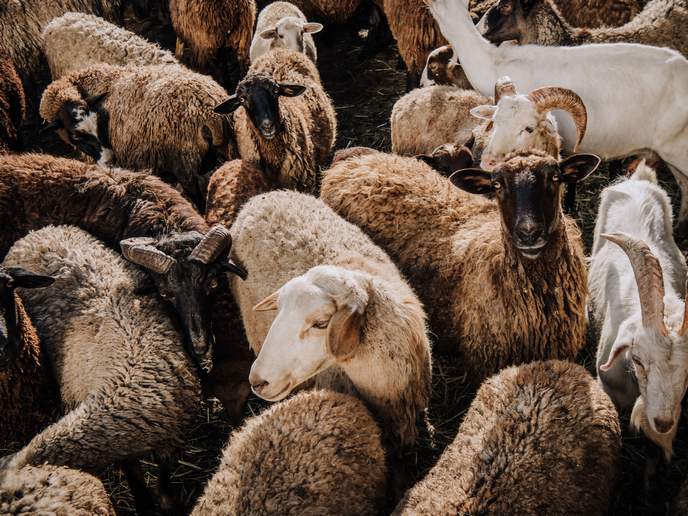
Archaeological artefacts such as the bones of domesticated animals have a lot to teach us about the biological and cultural history of prehistoric societies. Unfortunately, the arid conditions of the Levant have left few remains, and other advanced analytic tools such as ancient DNA(opens in new window) technologies are not effective. Palaeoproteomics analyses protein sequences left behind on artefacts as varied as dental plaque, eggshells, leather and skeletal remains. “Within ICARHUS, we used palaeoproteomics to generate data related to gazelles, for which little is known biologically, as well as age and sex-driven caprine herd management strategies of populations subject to climate change,” explains Le Meillour. Human selection of species, age and sex is directly influenced by climate. For example, when feed and water are limited due to drought, herders might prioritise young, fertile females. When archaeological remains indicate a wide range of ages and the presence of males and females, it is likely the herd was larger and resources more abundant. Just like modern humans, prehistoric communities faced climate-related challenges. ICARHUS is the first project ever to try and understand early herding strategies by sexing sheep and goat remains. By studying how prehistoric humans managed their herds in the face of ecological constraints, we can better understand the options before us in this rapidly warming world.