The smart chip revolutionising brain implants


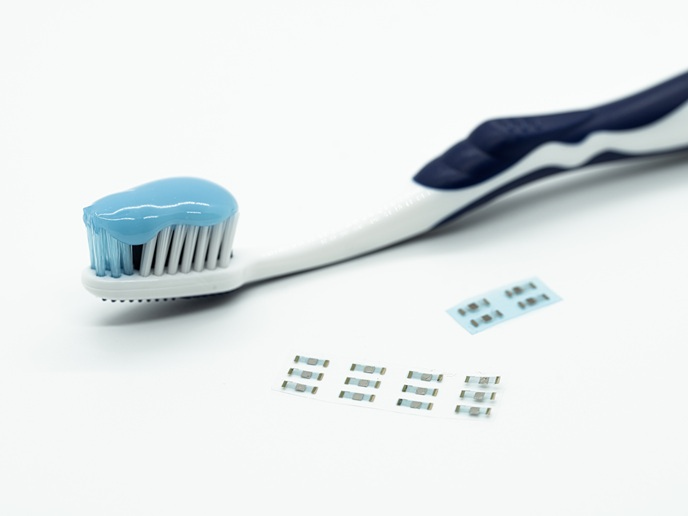
The EU-funded IoN(opens in new window) project has achieved a significant milestone in the development of intracortical brain-computer interfaces. This makes it possible to address one of the most persistent challenges in neurotechnology: the wireless transmission of high-volume neural data from miniaturised implants. The achievement is presented in a paper(opens in new window) published in the journal ‘Nature’. As demand grows for effective treatments for neurological disorders – ranging from paralysis to speech impairment – high-density microelectrode arrays (MEAs) have emerged as critical tools for capturing neural activity with exceptional precision. However, the substantial data generated by these arrays, which can exceed 300 Mbps for systems with 1 000 channels, creates a bottleneck for wireless telemetry due to constraints on power, bandwidth, heat dissipation and device size. To overcome these limitations, the IoN consortium has developed a novel two-stage wireless architecture centred on a transdural galvanic-coupled body channel communication (BCC) link that uses the body’s own tissue as a wire to transmit data without radio waves. This system enables data transmission from a free-floating MEA, positioned beneath the brain’s dura mater, to an intracranial receiver unit anchored at a minimally invasive burr-hole craniotomy site. By eliminating physical tethers between the MEA and the telemetry module, the design accommodates natural brain movement, thereby reducing micromotion-induced tissue damage, scar formation and signal degradation over time. The transdural BCC telemetry system demonstrated remarkable performance in validation tests. Tests and experiments using a human cadaver head confirmed wireless data transmission rates of up to 500 Mbps, operating only 20 % of the time to save energy and with fewer than one error in every 100 000 bits transmitted. Cadaver validation was supported by Erasmus Medical Centre.
Tenfold data compression without signal loss
A key breakthrough is a smart compression system that acts like a motion sensor for the brain. It only transmits data when neurons are active and stays silent otherwise. “This brings several advantages: drastically fewer data points (often by an order of magnitude), significantly lower power consumption, and much lower bandwidth needs – while all spikes are captured with high fidelity,” reports an article(opens in new window) posted on the website of IoN project coordinator imec, the Netherlands. By cutting the data volume by more than 10 times and drastically reducing heat and power use, the technology brings us closer to safe, long-term brain implants. Tests on brain-on-a-chip models confirmed the system does not trigger unintended brain activity, ensuring it is safe for long-term use in patients. This breakthrough represents a critical step towards scalable, energy-efficient neural interfaces capable of restoring motor, sensory and cognitive functions. By combining miniaturisation, high bandwidth and rigorous safety validation, the IoN (Intranet of Neurons: A Minimally-invasive and High-capacity Transcranial Telemetry Network for Large-scale Brain-wide Neural Recordings) project’s telemetry system paves the way for future applications that could transform the lives of individuals with neurological conditions. For more information, please see: IoN project website(opens in new window)