Boosting climate resilience in mountain regions

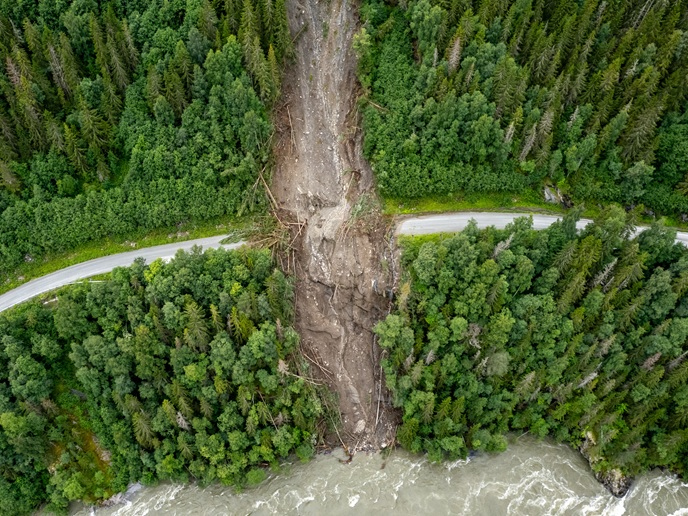
Europe’s mountainous regions, including the Alps, Dolomites, Pyrenees and Carpathians, are home to millions, and attract many more as visitors every year. But rising temperatures and more frequent extreme weather events are impacting water resources, agriculture, tourism and ecosystems. Funded under the EU Mission on Adaptation to Climate Change(opens in new window), the MountResilience(opens in new window) project is working across six pilot regions and four replicators, exploring local-scale responses to climate change and if these methods could be transferred and scaled elsewhere. By protecting high-value mountain economies from climate risks, reducing long-term infrastructure and disaster costs, and developing scalable adaptation approaches, the project helps safeguard regional economic activity and strengthens the conditions for growing markets in climate resilience solutions. “The main objective is to set the stage for effective adaptation action,” says project coordinator Anna Giorgi, an environmental botanist at the University of Milan’s UNIMONT campus(opens in new window). “We need to understand the situation today before deciding where we should go next.”
Turning climate risks into real-world action
MountResilience uses a risk analysis framework and Regional Adaptation Support Tool(opens in new window) that helps authorities understand the climate risks they face and where to focus their efforts. The pilot regions address a wide range of challenges, including drought, water management, changing tourism patterns, declining pasture productivity, heatwaves and wildfire risks. Together, they show how different mountain regions are affected by and respond to climate change in practice. In Gabrovo, Bulgaria, the aim is to help local authorities reduce climate risks while making better use of limited water resources. Alongside nature-based solutions for rainwater harvesting and green infrastructure planning tools, early warning systems for wildfires and extreme weather events are also being tested. In Piemonte, Italy, the focus is also on water management through decision support tools that help irrigation authorities and farmers monitor water use and plan for periods of drought. In Lapland, the project is working with tourism businesses and reindeer herders to understand how changing weather patterns are affecting traditional livelihoods. In Romania, activities in Râu Sadului focus on maintaining pasture productivity under changing climate conditions. “Solutions need to be implemented with a shared ownership approach,” remarks Giorgi. To do this, the team has established local councils in each of the six pilot regions, bringing together public authorities, businesses, researchers and community representatives to provide local knowledge and shape responses.
From local action to wider adoption
The tested solutions all have one thing in common: they help local businesses and populations weather the effects of climate change, protecting livelihoods and the fragile ecosystems on which they depend. The project is now taking the next step: its four replicator regions – Primorje-Gorski Kotar (Croatia), Friuli-Venezia Giulia (Italy), Podkarpackie (Poland) and Catalonia (Spain) – are exploring which ideas and approaches could be useful for them. To support the replication work, the project has also developed a Solutions Database(opens in new window) showcasing examples of successful adaptation measures and experiences from mountain regions across Europe. The idea is simple: if an intervention has worked in one area, other regions can use that knowledge to evaluate if it might work for them, saving time and costs. “We are working to create awareness about the importance of mountains not as marginal, but as a vital part of the European territory, with specificities to be recognised and valued,” concludes Giorgi.