Bioarchaeological insights into proto-Etruscan life patterns

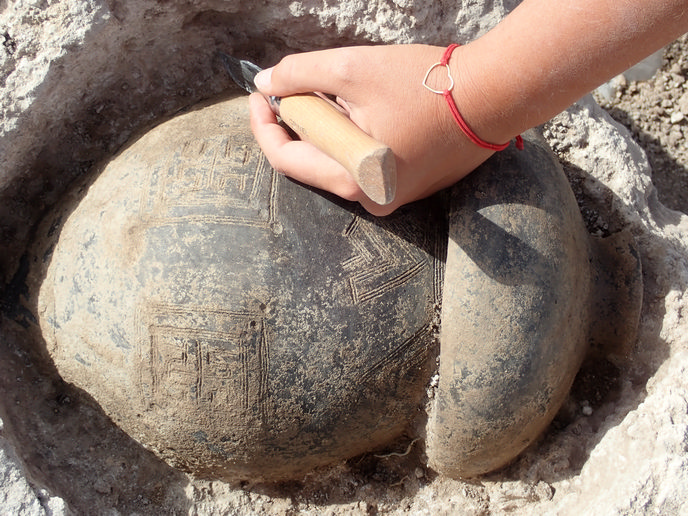
In the first millennium BCE, Italy saw the emergence of several cultural groups that transitioned from small communities to bustling urban centres. The Etruscans dominated this shift, organising themselves into some of the most formidable city-states in the Western Mediterranean. Supported by the Marie Skłodowska-Curie Actions programme, the TULAR(opens in new window) project (‘tular’ means ‘border’ in the Etruscan language) set out to investigate how human mobility and social networking in these pre-Roman proto-Etruscan communities helped shape a common cultural framework and how it evolved across periods of major transformation, when some groups gradually detached themselves from the original network, following different socio-political trajectories.
An integrated sampling approach
(Amelogenin peptide analysis) helped estimate biological sex from proteins preserved in the tooth enamel of inhumed specimens; this technique is more reliable than traditional osteological methods, more cost-effective, and requires less destructive sampling than ancient DNA analysis. The team further investigated 87Sr/86Sr non-local inhumed individuals using laser-ablation multi-collector inductively coupled plasma mass spectrometry, enabling the high-resolution reconstruction of childhood mobility during dental development. All the data were combined and analysed using the R statistical computing environment for a detailed interpretation of the findings. “By integrating biogeochemical evidence with traditional archaeological data, particularly from funerary contexts, TULAR enabled a more fine-grained interpretation of human mobility than could be achieved through conventional approaches alone,” says project coordinator Stefano Benazzi, professor of physical anthropology at the Department of Cultural Heritage of the University of Bologna. Importantly, TULAR placed great emphasis on minimally destructive sampling methods: the team developed the NOWA – ‘NOthing goes to WAste’(opens in new window) protocol to optimise sampling for histological, biomolecular and biogeochemical analyses of ancient teeth. NOWA allows multiple types of data to be obtained through a small sample of a single specimen while preserving the tooth’s original morphology.
Piecing together life histories
The TULAR methodology was applied at various sites such as Veii, Tarquinia and Vulci in Etruria proper, and Sala Consilina and Fermo outside Etruria. At Fermo, the team was able to determine, at approximately week-by-week resolution, when a non-local individual moved to the area during childhood and whether their diet changed over time. Notably, the research reconstructed the relationship of an Etruscan family with the surrounding landscape across three centuries (3rd to 1st centuries BCE) by analysing the Cai Catu hypogeum(opens in new window) in Perugia. “We attempted to reconstruct ancient people’s life histories, taking into consideration the diverse stages of an individual’s life by integrating bioarchaeological evidence with funerary practices, situating the deceased within their socio-cultural context,” says Carmen Esposito, TULAR principal investigator and lead researcher. As such, TULAR is expected to have far-reaching implications for archaeological research across not only borders but also historical periods.