Transforming heritage conservation with circular solutions

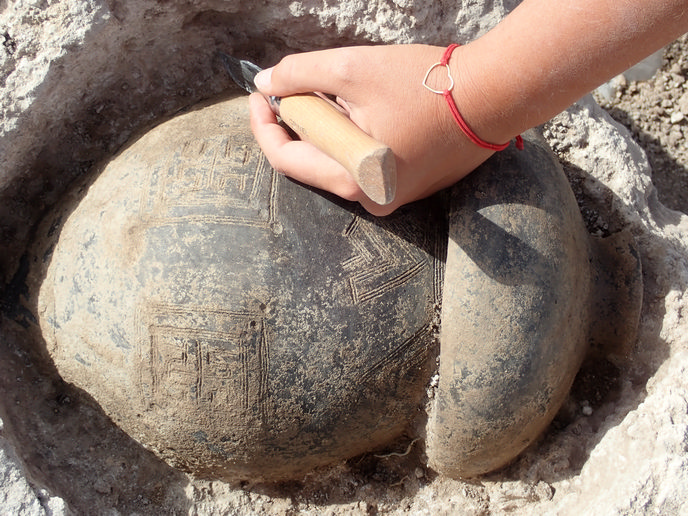
Climate change, pollution and extreme weather pose growing threats to historic buildings, yet traditional conservation approaches focus on repairing damage after it occurs. The SCORE(opens in new window) project breaks this pattern by incorporating circular economy principles, climate modelling and environmental impact assessment into heritage conservation across Europe and Latin America. “SCORE promotes preventive strategies that consider the physicochemical and biological processes that affect heritage materials, favouring interventions that are more compatible with the present and future environmental conditions and the original materials,” says project coordinator Beatriz Menendez. Undertaken with the support of the Marie Skłodowska-Curie Actions(opens in new window) programme, the project brought together historians, archaeologists, environmental scientists and engineers working alongside companies, NGOs and practitioners across northern and southern Europe, Colombia and Mexico.
Reducing environmental impact in restoration
One of the project’s main achievements was the development and testing of sustainable conservation methods, particularly restoration mortars with a reduced ecological footprint. These mortars incorporate recycled or reused materials such as crushed brick, glass or shells from the food industry, reducing raw material extraction and waste. Using life cycle assessment techniques, SCORE demonstrated that binder production is the main source of CO2 emissions(opens in new window) in lime mortars. “Some binders, such as aerial lime, can produce twice the CO2 emissions of others, such as hydraulic lime,” notes Menendez. Beyond material selection, she emphasises the importance of transport impact. The project developed a semi-automatic decision-support procedure that prioritises hydraulic lime and locally sourced materials. SCORE also explored the use of nanomaterials, such as zinc oxide and calcium-zinc-based compounds(opens in new window), to limit fungal recolonisation on stone surfaces. “By contributing to longer-lasting treatments, these materials can reduce the frequency of intervention and, consequently, the chemical load accumulated in the environment,” Menendez explains. To assess future degradation risks, the team applied dose-response functions, linking environmental conditions such as pollution or humidity to material decay. Combined with climate modelling, this enabled estimates of damage risks from floods, droughts and other climate extremes.
From Maya cities to a lasting research network
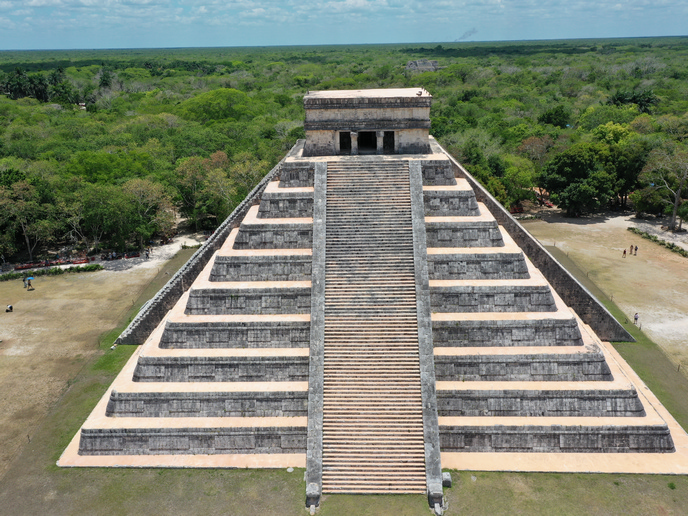
SCORE’s approach was tested through case studies in the Yucatán Peninsula, where heritage buildings face high humidity, biological growth and climate stress. One of the central sites was Chichén Itzá, one of the most visited archaeological sites in Mexico and a major political and cultural centre of the Maya world in the 10th century. “Chichén Itzá was the most important city in northern Yucatán, and this is reflected in its impressive architectural development,” notes Menendez. She stresses that “most of the walls and imagery of Chichén Itzá were originally polychrome,” requiring conservation approaches compatible with fragile painted and carved surfaces. The project also worked in the Calakmul Biosphere Reserve, a vast protected landscape combining tropical rainforest and archaeological heritage. The ancient city of Calakmul, one of the most influential centres of the Classic Maya period, contains hundreds of monumental buildings and sculpted stelae, many of which have been restored in recent decades. Beyond its technical advances, SCORE’s most significant legacy is the international network it created. “The goal of developing lasting research collaborations and strengthening research and innovation potential at European and global levels has been fulfilled,” concludes Menendez. New initiatives, including the CHARM project, will extend this collaboration and continue advancing sustainable heritage conservation.