Exploring the hidden potential of marine microbiomes

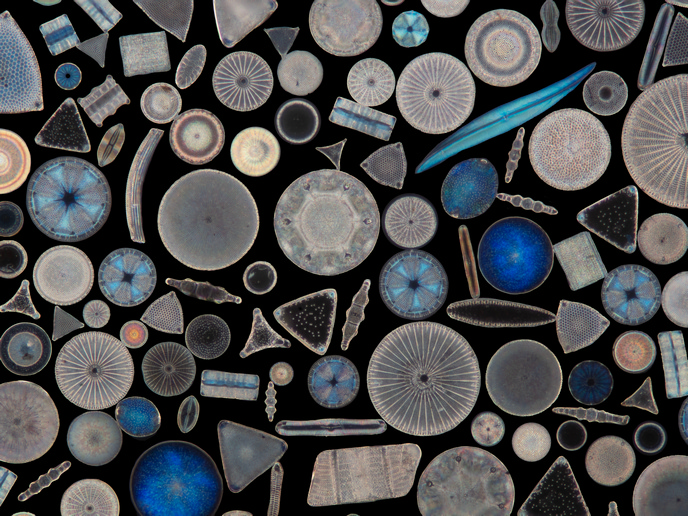
Every litre of seawater contains billions of bacteria, viruses, phytoplankton and protists that together form complex marine microbiomes. These microscopic communities underpin marine ecosystems and represent a vast, largely untapped source of enzymes, bioactive compounds and other valuable molecules. However, unlocking their potential for pharmaceutical and cosmetic applications as well as for environmental remediation has traditionally relied on bioprospecting approaches that are slow. These approaches also require a large number of resources and can place unnecessary pressure on marine ecosystems.
Greener exploration of marine biodiversity
The goal of the EU-funded BLUETOOLS(opens in new window) project was to address these limitations by redesigning the entire discovery pipeline. Instead of relying primarily on repeated sampling and large-scale laboratory screening, the project combined targeted sampling, metagenomics, innovative miniature cultivation strategies, bioinformatics and sustainability assessment into a single interoperable workflow. “Our objective was to obtain as much knowledge as possible from much less material. Most samples analysed during the project already existed in partners’ collections, allowing us to maximise scientific value while avoiding unnecessary environmental disturbance,” explains project coordinator Aurelio Hidalgo. The consortium generated more than 1 Tbp (tera base pairs) of (metagenomic) sequence data that can continue supporting future research. At the same time, researchers miniaturised functional screening assays to picolitre-scale droplets, reducing sample requirements, reagent consumption and laboratory waste. Compared with conventional robotic screening, the new platform is estimated to be around 400 times more efficient.
From discovery to application
A key achievement of BLUETOOLS was integrating technologies that are often applied separately into a unified biodiscovery platform. Machine learning, synthetic biology, droplet microfluidics and advanced bioinformatics worked together to rapidly identify and validate promising biological functions hidden within complex marine microbiomes. Researchers identified more than 500 previously unknown enzymes with potential industrial applications. These enzymes could replace conventional chemical catalysts for more selective and environmentally friendly biocatalytic processes. BLUETOOLS developed a https://doi.org/10.1093/nar/gkae1115(opens in new window) metagenomics toolkit which allowed researchers to identify more than 40 polymer-degrading enzymes, eight microbial consortia capable of degrading polymers and a collection of antimicrobial candidates with potential applications in healthcare and marine antifouling technologies. In parallel, they discovered more than 4 000 biosynthetic gene cluster candidates that may represent future sources of valuable natural products. Moreover, different cultivation platforms were developed, ranging from microscopic droplets to larger bioreactors, which enabled researchers to study microbial communities under diverse environmental conditions.
A sustainable framework for marine biodiscovery
Beyond individual discoveries, BLUETOOLS established a comprehensive framework that can continue supporting both research and industrial innovation long after the project has concluded. The consortium is now focusing on validating its most promising enzymes, resistance genes, antimicrobial compounds and polymer-degrading systems while assessing their environmental performance through life cycle analysis. This approach will help identify which technologies offer genuine sustainability advantages and where further optimisation is needed before commercial deployment. BLUETOOLS demonstrates that scientific innovation can advance while protecting ocean ecosystems. By transforming how marine microbiomes are explored, the project provides new opportunities to discover solutions for health, industry and environmental sustainability. “Our most important legacy is demonstrating that future biodiscovery should generate both economic value and ecological responsibility, what we describe as econology,” states Hidalgo.