



From ashes to opportunities

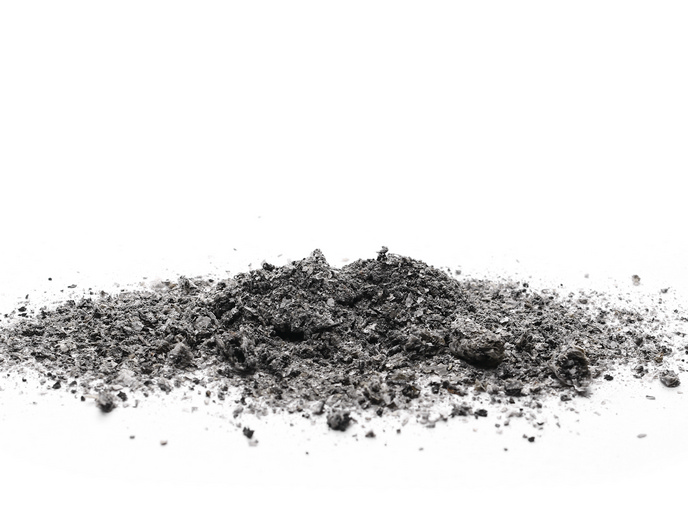
When municipal solid waste, low-quality biomass and sewage sludge are disposed of via incineration, they leave behind a pile of ash. But while most might see this leftover ash as trash, the EU-funded AshCycle(opens in new window) project sees the potential for treasure. “Within this ash are a significant number of metals, nutrients, rare earth elements and industrially valuable minerals that could be recovered and reused,” says Tero Luukkonen, an associate professor at the University of Oulu(opens in new window), the project’s coordinating partner. To help make this possible, the project developed a range of new methods for recovering these elements, as well as processes for turning them into new industrial solutions.
Turning ash into concrete
At the heart of the project are 21 industrial pilots(opens in new window) conducted in eight countries, each of which focused on a different combination of recovery methods and solutions. For example, in Finland, the project produced a precast concrete barrier made from co-combustion bottom ash – a waste derived from solid recovered fuel and biomass co-combustion. During the pilot, ash was sieved to the desired particle size and incorporated into the concrete mixture at 22 % volume content, with the bottom ash replacing the natural sand typically used in concrete. The resulting barriers were then installed at a local waste management centre where they are being used as space dividers. “The study successfully demonstrated the feasibility of reusing bottom ash in concrete production, highlighting a promising step towards sustainable and circular construction practices,” explains Luukkonen. In Belgium, a pilot project reused co-combustion bottom ash to produce paving blocks, while a Croatian pilot turned wood biomass bottom ash into an aggregate replacement for use in various types of urban equipment. In the Netherlands, ash was converted into concrete used to create public outdoor benches.
Overcoming the barriers to ash valorisation
According to Luukkonen, the pilot projects show that the barriers to ash valorisation are not technical but related to a lack of coordination on end-of-waste criteria, leaching compliance, cross-border waste movement, and economic incentives. “To address this issue, the project’s partners worked to establish effective partnerships between local communities, businesses, academia and civil society to transfer knowledge and better respond to industry needs and consumer uptake,” he adds. The project also developed a cloud-based digital tool that uses artificial intelligence and machine learning algorithms to evaluate the quality and optimal utilisation potential of ashes.
Advancing Europe’s circular economy
Although the AshCycle project is now finished, its impact continues. “By providing methods and processes for evaluating, recovering and reusing the valuable materials found in ashes, our research not only reduces the amount of waste that is landfilled, it also advances Europe’s circular economy,” concludes Luukkonen. The project’s results have been documented in numerous reports and scientific publications(opens in new window) that will remain as a reference for future researchers and companies aiming to valorise ash. Project partners(opens in new window) are now evaluating whether some of these results can be adopted in their own industrial activities.