Nanocoatings join battle against cross-contamination

The recent Covid pandemic brought into sharp focus the threat posed by cross-contamination. Today, ensuring that high-risk environments such as hospitals are safe from viral and bacterial infections remains a constant challenge. This is critical not only for patient health, but also to reassure citizens that public spaces are accessible and safe.
Meeting safety standards of operating theatres
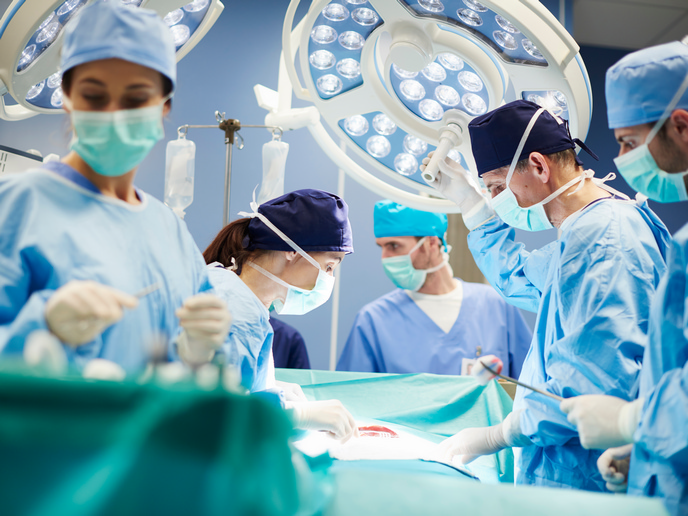
The MIRIA(opens in new window) project sought to create safer public environments through developing antibacterial, antifungal, and antiviral coatings for objects of everyday use, from handrails to bedlinen. From the beginning the project team set the bar high, aiming to demonstrate these innovations in the demanding environment of an operating theatre. “My predecessor Mario Tului was the mastermind behind this,” says MIRIA project coordinator Angelo Meduri from (RINA-CSM) in Italy. “He recognised that all sorts of surfaces are found in operating theatres - different kinds of metals, textiles, plastics, and glass. Objects like keypads, instruments and doorhandles will be touched a lot.” Demonstrating the safety and efficacy of various antimicrobial coatings in an operating theatre setting would also hopefully ensure the swift roll out of products to other, less demanding but equally important public environments such as nursing homes, schools and public transportation.
Nanoparticles and coating techniques
To achieve its aims, the MIRIA project brought together 15 entities, from eight European countries, covering the nanocoatings value chain from research and universities through coating developers and industry to end users. Technical expertise was provided across design, development, upscaling and demonstration. Different types of active molecules, such as nanoparticles and light-activated molecules, were developed alongside coating technologies like plasma sprays and bio-based coatings. These products went through various iterations in order to make them applicable to demanding medical environments. New application techniques were developed for complex objects such as door handles, while coatings were adapted to the specific requirements of different surfaces. “In a hospital, you cannot easily move people because you want to apply antimicrobial coatings to surfaces,” says Meduri. “We therefore developed safe coatings that become perfectly dry at room temperature. We also developed transparent coatings for glass surfaces.” These innovations were next tested in operating theatre environment. The efficacy of the newly developed antimicrobial coatings was assessed by demonstrating their performance using non-pathogenic bacteria, making testing more compatible with healthcare environments.
Addressing physical and psychological public health
The success of these trials has opened the door to further research, as well as the eventual commercialisation of coating products. End users are currently in contact with coating developers to incorporate innovations in its equipment product range. “We are looking into patenting possibilities,” adds Meduri. Project partners have also been discussing a possible follow-up project, which would build on the results achieved so far. Further work could also ensure that all coatings are free of critical raw materials. Another important element will be continued communication with both medical professionals and citizens regarding the importance and effectiveness of tackling cross-contamination. As Meduri points out, the Covid pandemic impacted some people psychologically as well as physically, making them wary of shared public space. In making shared critical spaces safe for all, the MIRIA project hopes to address this facet of public health as well.