Mitochondria hold clues to how invasive crabs survive

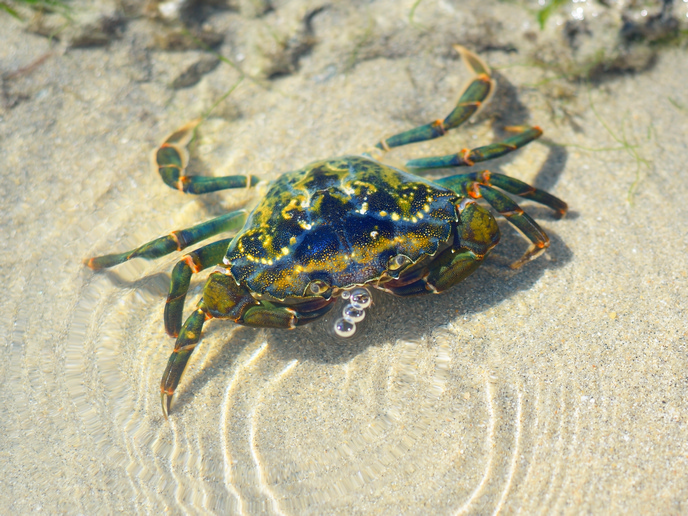
A small shore crab from the coasts of Europe and North Africa has made itself a home on other sides of the world. Spread by human activity, the European green crab (Carcinus maenas) now lives in Australia, Japan, South Africa and the Americas, and it is listed among the world’s 100 worst invasive alien species(opens in new window). Whether introduced naturally or intentionally, these species are a main driver of biodiversity loss, and in a world of climate change and pollution, they often adapt better than native ones. But what makes them so adaptable? Recent research has linked this to rapid evolution, which allows them to adapt quickly and avoid extinction. Supported by the Marie Skłodowska-Curie Actions programme(opens in new window), the MitoRescue(opens in new window) project looked for answers inside cells, in the mitochondria that supply them with energy. Focusing on C. maenas, the project’s starting point was that, under stress, mitochondria-rich cells in its gills can produce extra energy, which could help the animals adapt.
Flexibility over energy
Researchers sampled crabs at 12 sites: native populations from cooler waters in France and warmer waters in Portugal, and a long-established, warm-water invasive population in Australia. They measured whole-animal respiration, genetic diversity, stress-related biochemical markers in the gills and the structure of the hepatopancreas, a digestive organ. The crabs’ invasion success in Australia was not explained by better body condition or higher energy demand. Instead, the differences lay in biochemical regulation. “Our results indicated that the success of the invasive C. maenas population may rely on regulatory and metabolic flexibility rather than changes in baseline energy balance,” says project coordinator Jehan-Hervé Lignot. Usually, invasive populations are expected to have less diversity than native ones, because they descend from only a few founding individuals. Yet, the Australian crabs showed mitochondrial genetic diversity comparable to that of the native populations. Lignot notes that this is not uncommon when invasions involve multiple introductions or mixing between source populations.
Lessons from polluted waters
The team also examined how crabs respond to cadmium, a toxic metal. Crabs from sites with a history of cadmium exposure showed higher mitochondrial respiration and produced more reactive oxygen species – natural by-products of energy production that can damage cells – alongside stronger anti-oxidant defences. Crabs with no previous exposure responded differently to cadmium. Their mitochondria shifted the balance between two key components, which may limit by-product formation while allowing detoxification and other defences to operate. “These findings suggest that long-term metal exposure induces mitochondrial adaptations that enhance resilience to pollution, potentially facilitating the invasion success of the green crab in contaminated environments,” explains Lignot. MitoRescue also developed a protocol for studying marine and freshwater crustaceans such as crabs. Crab gills are thicker and less permeable than fish gills, so they need harsher treatment to measure mitochondrial function. The usual chemical, saponin, can itself impair mitochondria, so the team tested different treatments and found that 30 minutes of exposure gave the best results. The project’s approach will be tested on other native and invasive species, such as the Mediterranean green crab alongside the invasive blue crab. The work, adds Lignot, “offers new perspectives for managing marine invaders in a changing ocean.”