Paving the way for the high-performance nuclear clocks of the future

From satellite navigation to synchronised communications, precise timekeeping underpins much of modern technology. At the frontier of this field lies thorium-229 (229Th), a rare isotope with an unusually low-energy nuclear state that can be triggered by laser light at around 148 nanometres. Embedding this isotope in a transparent crystal such as calcium fluoride could one day yield compact solid-state nuclear clocks of extraordinary accuracy. However, a crucial obstacle remains: the surrounding atoms in the crystal alter the nuclear energy levels. Until now, exactly how this environment affects the nuclear transition was poorly understood. Research supported by the EU-funded ThoriumNuclearClock(opens in new window) and CC4DYN projects addresses this uncertainty by offering foundational data for designing the next generation of timing devices.
Revealing four distinct crystal sites
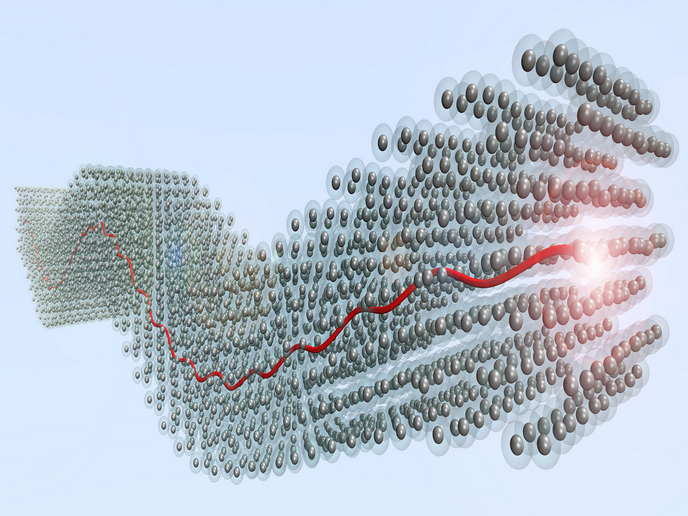
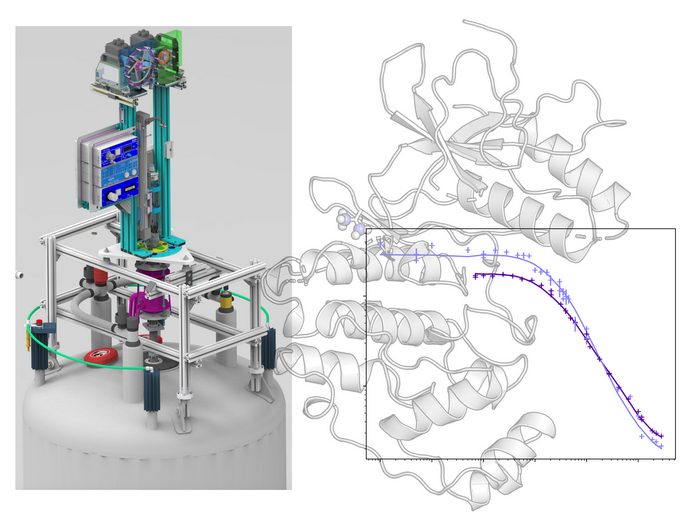
Researchers from Austria, Japan and Switzerland investigated 229Th embedded in calcium fluoride crystals. Using a vacuum ultraviolet laser, the team performed laser Mössbauer spectroscopy, extending into the optical range a technique traditionally used to probe the physical and chemical environments of nuclei. A custom detector suppressed background radiation, allowing weak nuclear signals to be measured with high precision. Published in ‘Science’, the findings(opens in new window) show that 229Th occupies four distinct microscopic sites within the crystal lattice, each experiencing a different local electric field environment. By combining spectroscopy with density functional theory calculations, the team assigned microscopic models to the two dominant sites, which together accounted for over 90 % of the detected vacuum ultraviolet signal. “By resolving the nuclear spectra site by site, we established a way to investigate how 229Th atoms are incorporated into a solid and how their immediate surroundings affect the nuclear transition,” states study lead author Takahiro Hiraki, assistant professor at Okayama University, Japan, in a news item(opens in new window) posted on the university’s website. “This information is essential for understanding and engineering the crystal environments needed for future solid-state nuclear clocks.”
Engineering crystals for better performance
Beyond identifying the sites, the team used site-selective excitation to compare how the nuclear state behaves in each environment. The radiative lifetime of the excited state proved consistent at approximately 630 seconds across all sites, but the efficiency with which laser light quenched this state varied strongly between them. This variation matters because it determines how well a crystal can preserve the nuclear excitation that powers the clock. “The strong variation in quenching between the sites shows that the local crystal environment is not merely a passive host,” notes senior author Koji Yoshimura, a professor at Okayama University. “Identifying which structures preserve the nuclear excitation and which promote its loss will help us determine how to prepare crystals with improved performance.” The study supported by the ThoriumNuclearClock (Thorium nuclear clocks for fundamental tests of physics) and CC4DYN (A quantum chemical approach to dynamic properties of real materials) projects establishes laser Mössbauer spectroscopy as a reliable method for revealing the microscopic environments of thorium in solids. In doing so, it supplies the groundwork for building compact clocks that could advance navigation, synchronised communication and new forms of precision measurement. For more information, please see: ThoriumNuclearClock project website(opens in new window) CC4DYN project