Harnessing electrostatics improves industrial powder handling

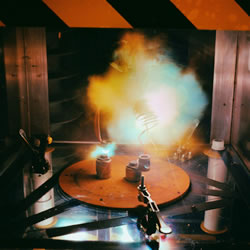
A television screen is usually dust’s favorite place. As dust is attracted to the screen due to electrostatic phenomena. Dust particles rub with the air molecules and among each other during their movement and become charged either positively or negatively. The already charged TV screen attracts the particles that have the opposite polarity. Similar situations can be found in every application in which powder is involved. Of course, while a film of dust on a television screen can be removed easily when it comes to industrial applications particularly those dealing with powder handling, electrostatic phenomena can create major problems. Chilworth Technology Ltd, is a company specialising in innovative applications of electrostatics. In cooperation with other non-manufacturing partners, Chilworth Technology Ltd launched a project with the aim to provide solutions to problems created by electrostatic phenomena during handling and processing powder materials in big industrial applications. These problems create manufacturing complications including machines choking, material adhering to conveyors, poor powder flow, defective products and sometimes to life threatening hazards such as ignitions and fires. Initially, the project team tried to better understand the general behaviour of charged particles of powder. The second step involved their attempt to categorise the powder and to model some processing machines for better laboratory examination and for studying specific manufacturing conditions. Finally, the knowledge and the experience gained led to solutions that not only overcome these problems but also harness electrostatics for beneficial uses. The results of the project will enable the European cement, pharmaceutical, food, nuclear, paper, textile and other industries to locate the causes of electrostatic charge problems, to quantify and deal with them appropriately and to achieve more effective manufacturing processes.