Quality control for nano circuits

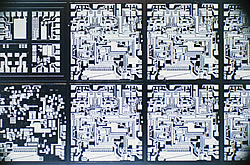
Nano Imprint Lithography (NIL) is a recently introduced technique that is used for the production of nano electronic circuits. It offers a unique and cost-efficient way to produce massively, fine structures over large areas with dimensions down to the nanometer range. In a NIL process an inverted copy of a stamp pattern can be generated by pressing a stamp into a polymer heated above glass transition temperatures followed by cooling and release of the stamp. The pattern structures are reproduced after subsequently performed metallisation of the imprint and substrate lift-off. In order to test the quality of the final imprinted products the University of Duisburg in cooperation with a microelectronics manufacturer developed an optical measurement technique. Instead of the normal polymer that is used for the for nanometre-scale patterns, they use polymers enriched with fluorescent labels. When the circuits have been stamped, imprint samples are scanned and the fluorescence intensity is calculated for each part of the surface, revealing the adhesion as well as the local polymer deposits. This analysis provides information on the conditions under which the whole process takes place as well as validation of the quality of the final products. This method does not increase significantly the production cost while provides a useful tool for routine quality check of the imprints. The partners are currently working on the development of software that will automate the scanning process making the method even faster, user-friendlier and more reliable.