



Optimisation of severe nuclear accident management

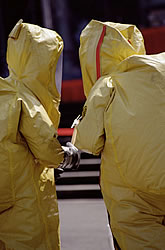
In April 1986 an accident at the Chernobyl nuclear power plant caused the release of radioactive material into the atmosphere. Over thirty people died as a result and the incidence of several cancers rose significantly in the local population. Europeans rely on nuclear energy as an important source of power. Care must be taken to safeguard human health and to protect the environment. This challenge has taken on new meaning with the enlargement of the European Union. Many new Member States, which were former members of the Soviet Union, employ nuclear reactors based on older technology. The European Commission funded research aimed at reducing the risks associated with the operation of nuclear reactors. Specifically, the partners gathered the information necessary to estimate the radioactive release potential of the various types of reactors operating across the European continent. Once these source terms were derived, the heart of the project was to assess the effectiveness of different Severe Accident Management (SAM) strategies. As expected, SAM measures were more effective in limiting the release of less volatile radioactive material. On a positive note, values for both volatile and non-volatile species were typically below accepted thresholds for a wide variety of accident scenarios. An important recommendation coming out of the study is the call to revise current SAM guidance. Individual strategies sometimes counteract one another and hence their implementation must be intelligently coordinated for optimal containment. International regulatory bodies as well as national authorities should heed the results of this work. In doing so, Europe will be able to continue to exploit the advantages of nuclear energy over other types of energy production while preventing future Chernobyls.