Implications of oxidative stress on human disease

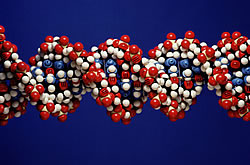
Oxidative stress-induced DNA damage takes the form of etheno-DNA adducts, DNA lesions, which are known to be repaired via the base excision repair (BER) pathway. However, new research has recently shown that mammalian and bacterial cells have a further repair mechanism in place, acting as a back up to BER. The new pathway, termed the nucleotide incision repair (NIR) pathway, could have important implications in the identification of new oncogenes and for the characterization of new pharmacologically important targets. At the enzymatic level, the human alkylpurine-DNA-N glycosylase (ANPG) enzyme has also been shown to be involved in the repair of specific etheno-DNA adducts, although it has not been further established as part of the NIR pathway. Developments in the study of the effects of oxidative stress in cellular function and morphology have yielded a number of interesting points. The implications of the NIR pathway and the significance of ANPG could prove valuable in the near future, as the quest for pharmacologically relevant targets becomes more pressing.