Mining companies get serious about methane

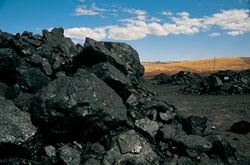
Coalbed methane (CBM) is a particular form of high-quality natural gas found trapped in coal seams. CBM is a source of 'clean' energy and as such has attracted the attention of industry experts. The EU-funded ICBM project aimed to optimise current state-of-the-art CBM recovery methods, in an effort to improve mining industry yields and minimise pollution risks. Due to CO2's stronger adsorption capacity, in comparison to methane, injections of waste CO2 to coal seams cause the release of CBM. This approach can be doubly beneficial, since it not only improves CBM recovery levels but also 'traps' CO2 in coal beds, away from the atmosphere. Project partner Imperial College London worked on elucidating the effects of various parameters, such as pressure, temperature and flow constraints, on the recovery process. Imperial College researchers developed a laboratory core scale model to test the effect of the above-mentioned parameters on dry and water-saturated coalbeds. The aim was to use the emerging knowledge to define permeability, diffusion and gas flow across coalbeds during CBM recovery. The model consists of coal cores placed in lead and rubber sleeves and incorporated into a high-pressure metal tube. The tube ends are constructed as to allow gas flow, monitored by flow meters on both sides. The data can be used to aid mining companies in their efforts to access and successfully recover CBM at satisfactory levels. Such experimental observations constitute the first step towards a fully comprehensive approach in regards to improved CBM recovery using CO2 under the correct conditions.