The cost of grassland management

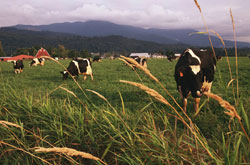
Traditionally, when one thinks of grasslands, one thinks of cattle grazing. Realistically, a far more diverse range of animals relies on grasslands for their sustenance, from birds, rodents, and even insects. In practice, the clash between agricultural grasslands and traditional ones has been long standing. However, economic and social pressures have often moved in favour of grazing fields, much to the cost of traditional grasslands. Therefore, when adapting areas of wild grasslands to more appropriate feeding type grasses, the impact of such needs to be carefully assessed and understood. At the risk of losing a primary food source for a host of animal and insect species, grassland management needs therefore to consider biodiversity. An EC funded, LIFE QUALITY project sought as its primary objective to evaluate sustainable grazing management practices with the intention of both maintaining and enhancing grassland biodiversity. As such their investigations lead them to a number of comparative studies that included animal foraging behaviour, agronomic output, botanical and structural biodiversity and finally, a comparison of invertebrate biodiversity. The overall conclusion on an economic basis showed that whilst farmers remain willing to adopt lower stocking rates, they are only willing to do so if appropriate subsidies exist. Moreover, they are reluctant to adopt the more traditional breeds of grasslands simply because no appropriate marketing structures exist. Economics therefore plays a key and centralized role to the adoption of biodiversity in grasslands. The researcher's investigations confirmed the lack of economic opportunity for these traditional breeds, but also noted that opportunity could perhaps be created through better marketing activities. Currently, the researchers are seeking further collaborative assistance with partners who can either consult or provide clear communication services with agricultural or conservationist groups.