Powering Europe's future with biomass

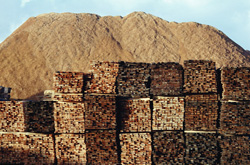
Some of the Sun's energy that reaches the Earth's surface is converted and stored in biomass. Recently, a good amount of research and development has taken place to promote the use of biomass in electricity generation. This is because, in comparison with fossil fuels, biomass is a renewable, environmentally-friendly source of energy. FBCOBIOW is one of several biomass projects funded by the Energy, Environment and Sustainable Development Programme. It targeted a comprehensive technical and financial assessment of the potential of burning biomass in combination with coal and other fossil fuels. Engineers with the Wroclaw University of Technology, an FBCOBIOW partner, were assigned the task of identifying biomass appropriate for use in a 670 MW facility in Turow, Poland. The Combined Heat and Power (CHP) plant is outfitted with Fluidised Bed Combustion (FBC), which is highly compatible with biomass applications because of its use of pressurised air to create a turbulent flow in the combustion chamber. The Polish scientists concluded that locally sourced wood processing waste, willow and straw were the favourable most choices. Chemical analyses of this biomass shed light on how to best store it prior to usage. The most important work in FBCOBIOW focused on optimising the combustion process taking into account a wide variety of factors, including emissions, power generation, safety, start-up and operating costs. Two different types of feeding systems were developed to supply biomass to the burner that differed in the way the biomass was stored prior to firing. The Polish engineers found that the greatest efficiency was achieved with mixtures comprising 10-20 % biomass. Countries like Poland will be able to use these results to produce electricity cleaner and to limit their impact on climate change.