Environmental conditions influencing life on seamounts

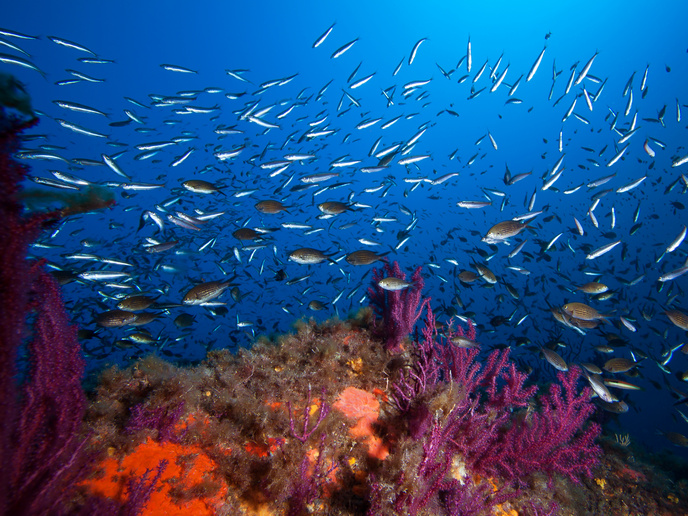
Advanced technology has revealed countless features such as seamounts arising in every shape and form from the sea floor of the deep ocean, often in marine areas beyond national jurisdiction. Observations with submersibles and remote controlled cameras in these rare and unique ecosystems have documented that seamounts provide essential habitat for a large variety of marine species. However, the same observations have documented the increased footprint of human activities in these still little-known waters of the deep and high sea, especially from the growing exploitation of their natural resources. The OASIS project integrated physical and biogeochemical studies to provide a holistic assessment of seamount ecology in the North-East Atlantic ocean. The overall aim was to apply the scientific knowledge gained in the development of site-specific solutions for sustainable management. Research work at the Institute of Marine Sciences in Barcelona focused on environmental characteristics of the sea waters that influence spatial and temporal patterns of organic material supply to the seamount benthic community. The dependence of salinity on temperature was studied using extensive data sets gathered during the last two decades from the surface and upper thermo-cline waters of the whole Canary Basin. After exploring several possibilities, salinity was expressed as a polynomial of temperature with variable degree and the best polynomial fit was selected to satisfy several statistical criteria. The analytical relations derived provide improved spatial resolution of two by two degrees in latitude and longitude, as well as increased reliability, which was verified using independent hydrographic data sets. The polynomials can reproduce actual density values and other dynamic quantities with performance that exceeds estimate methods based on climatological data.