Unravelling desertification


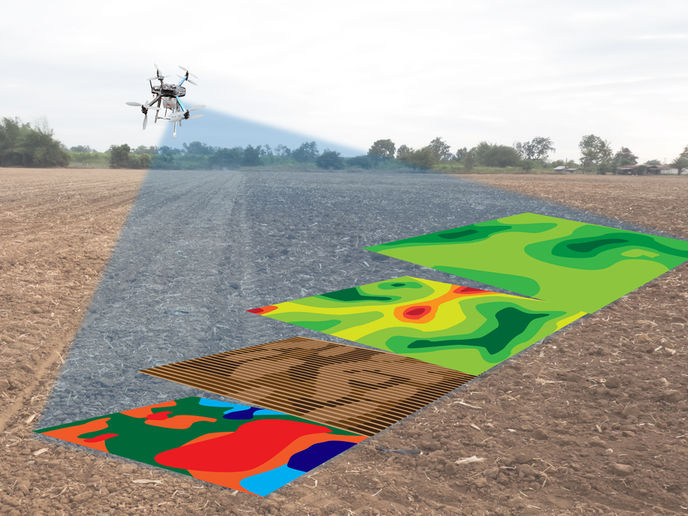
Often desertification has been seen to result from over-intensive land use practices. However, rarely is it acknowledged that human causes of desertification are embedded in economic, social-cultural and political dimensions. Currently, the main focus is on natural processes behind desertification and on developing technological solutions to ensuing problems. As a consequence, little attention is paid to the social sciences enquiry into the impact of human actions. The MEDACTION 4 project adopted an integrated, multidisciplinary approach, involving social and natural scientists as well as principal stakeholders in the Mediterranean region, to develop sustainable land use management strategies. To assist decision-makers in the policy design process, a prototype modeling system was designed to forecast possible impacts of climate changes on land use patterns. The Synoptic prediction system can model geo-environmental interactions by using neural networks to represent and interpolate spatial data patterns. This is done with the minimum a priori assumptions made about the nature of these patterns. Fuzzy logic-based inference methods were employed to incorporate physical and socio-economic variables and to translate differences in the neural network-based land use classifications into land degradation indicators. The beta version of the system has been delivered as an online resource in an attempt to provide for a web-based Geographical Information System open to public participation. SPS can be accessed and used from anywhere on the internet through a Sun Java enabled web-browser. Moreover, all the software on the server at the University of Leeds are open source and can be obtained and installed to create servers elsewhere. SPS provides a basic framework for a scenario-based forecasting system that can be updated and extended as new input data becomes available.